Bob Tanner - Legend of the High Sierras
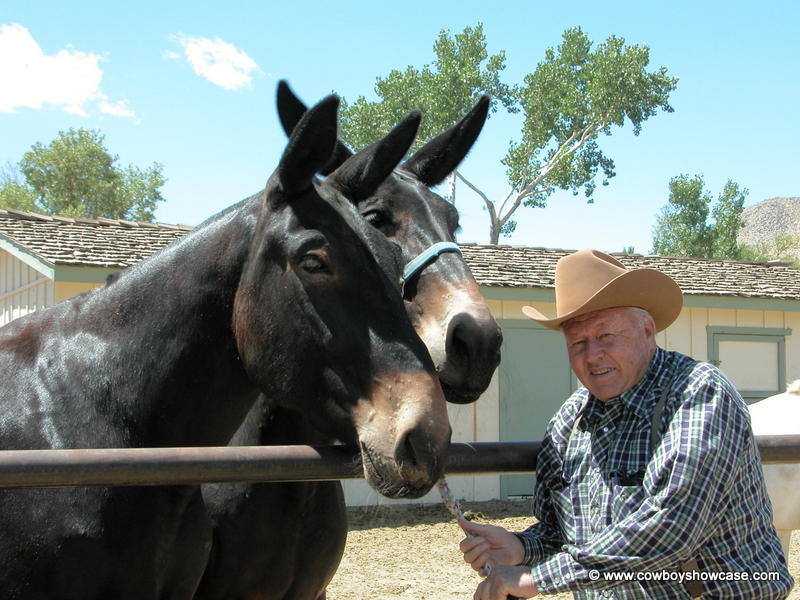
From the floor of the Owens Valley, south of Bishop, California, to the tallest peaks of the Eastern High Sierras, the actions of water and ice have formed an ever-changing landscape of remarkable contrast. This spectacular mountain country is where Bob Tanner has spent most of his adult life as a packer, pack station owner, and mule man. Bob and his Red’s Meadow Pack Station are known throughout the world. Since 1960, Bob and his packers have taken state governors, U. S. Government dignitaries, movie stars, and people from all over the world on pack trips. Bob is permitted to operate in a 175-square mile area of mountain wilderness in Yosemite National Park and The John Muir Wilderness Area. The Red’s Meadow Pack Station, where Bob packs out of during the summer months, is located near Mammoth Lakes, California. During the early part of June 2004, we traveled to Bishop, California to meet Bob at his winter home. Bob’s ranch crew had gathered Bob’s horses and mules from where they had wintered out on 5,000 acres of pasture in Owens Valley. Over 100 horses and mules were to be driven by wranglers and paying guests on horseback during a 3-day drive from Bob’s ranch west of Bishop to Mammoth Lakes. We were invited to come along on this drive.
Bob’s Early Years
We met Bob at his Bishop ranch. Bob is getting up in years but his mind is sharp and he is the man in charge. Bob said, “I started out in the packing business in 1949, at 19 years of age, when I went to work on a summer trail crew in the High Sierras. I needed a summer job to help pay my way through college. We had an old miner for a trail boss who knew how to blow up rocks, so we made little rocks out of big rocks and built a retaining wall in the back country that is still there today. I took a horse I owned with me and this horse taught me some valuable lessons on how not to do things. First thing that happened I hobbled this horse so he could eat grass. The horse left soon after I hobbled him and hopped all the way back to the trailhead with me walking behind.” “We used mules to pack our trail repair equipment on. I had been around horses some but I knew nothing about mules. I soon found out that packing was just plain hard work. There are very few shortcuts. You are constantly lifting heavy objects to be packed. The hours were long and the pay was minimal. You soon learn that when you are riding your horse or mule leading a pack string is the time to rest. Riding cannot be work for you. However, I found I loved the work, the mountain country, and the challenge. With packing you have a goal. You start out from point A going to point B. You are alone on the trail with your pack string with no one to rely on, only your animals and yourself. When you reach the place you were packing to, you felt like you had accomplished something. Packing is a mental state. Nothing can be too tough for you to handle. My family was all competitors and I loved hard work, so I felt right at home packing in the Sierras.” After Bob graduated from College, he put in a hitch as an officer with the US Navy during the Korean War. After his discharge he tried coaching athletics but then drifted back into the packing game. There was lots of mining activity going on at that time in Inyo County. Mules were a very important part of the mining operations, as most of the supplies and ore need to be packed in and out of the High Sierras. There were few roads in this mining area. There were a lot of packers operating in this county. Bob said, ”I had the desire to be a packer. So, I set out to learn all I could. The first thing you learn when you set out to be a packer is you need to know how to shoe your mules and horses. If you did not shoe you were just considered to be a worker. I began to learn to shoe. You find out very soon that the faster you are at putting on shoes the easier it will be to get along with the animal. Mules and some horses will only stand still for a time, and then they began to get nervous and start to move around. The longer the shoeing job takes, the more difficult the animal can be to deal with. There is no substitute for experience, but every horse shoer has to start somewhere. I picked up the finer points in shoeing and with practice and some help from the other packers and horse shoers I became quite proficient at shoeing horses and mules. During this same time I began to learn how to use a lash rope to tie down your load and tie the basic lash hitches. Some packers are better than others with this rope. However, it is still just a piece of rope ” Bob worked around various packers then went to work at Red’s Meadow as a packer. In 1960, after 7 years apprenticeship in the packing business, Bob bought out this pack station and has been the owner for over 44 years. The livestock brand Bob uses, the arch M, belonged to the previous owner, Archie Mann, and was purchased along with the pack station. Bob said, “The first things you need to find when running a pack station are good employees and good livestock. You need people working for you that are dedicated, good with the public, and that are able to keep the paying customers from getting hurt around livestock. I soon found out that if you give your employees and your animals plenty of work and plenty to eat you will get along fine. If you lack in work or food there can be trouble.” 
Mules:
Bob had some very interesting observations concerning mules. “Mules in California, as time went on, became smaller. There were very few mules used for farming or mining any more, so there was not much demand for big mules. We needed to find a source of draft-cross mules and started looking in the southeastern United States where mules were still used to pull a plow. We found a source for Belgian draft-cross mules in Tennessee and have been purchasing our replacement mules there ever since.” “There is a fine line between a big mule and an athletic mule. You do not want a mule that is too tall because everything you place on its back you need to lift up. Thoroughbred-cross mules will not work. They are too nervous and high strung. Mexican style mules that are tough and wiry some times can be bad to kick and therefore are dangerous to be around. You need a cold-blooded mule with some bone in their legs that will not panic if you get in a storm on the trail. If a mule is too large and heavy, its front end will not hold up with a lot of weight on its back in these mountains. They will break down in the front end and go lame.” “Feeding your mules and horses is very important in running a pack station. When you mix mules and horses together in a night corral and feed them hay, I feed my animals once a day in the evening. We put out plenty of hay in feed bunks so that all of the animals get their fill. I like to see some hay left over in the corral in the morning. This tells me that even the weaker horses and mules within the social structure and pecking order have also had something to eat. We only grain our animals in the morning before they go out on the trail. If you start graining at night these animals will start running off the mountain at the end of the day to get to the grain. This could be the start and cause of “barn sour” animals.” “The amount of weight you can put on a pack mule depends on what kind of shape this mule is in. When our summer season first starts we do not overload our animals. As the mules and horses get “legged up” from working on the trail every day you can increase the weight of the loads. If a mule wants to be difficult to get along with you can increase it’s load and soon this mule will going along with no problems. As general rule each pack mule carries 125 pounds. We pack our mules and ride our horses.” 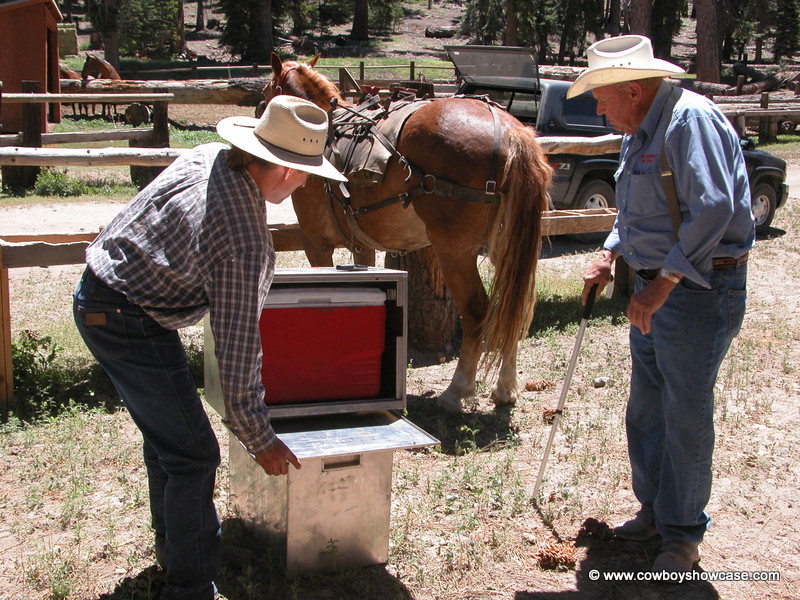
Pack Gear:
Bob said about the type of pack gear used, ”I have used all types of pack gear through the years. This Sierra country is sawbuck packsaddle country. We use sawbuck pack saddles and ”manatee “ our loads lashed down with a lash cinch. We also use packsaddles that have large leather pannier bags. These bags will outlast the canvas type bag and are larger. We have these special made. In recent years, due to Federal regulations, we have gone to bear-proof metal boxes for use in storing food in the backcountry. These boxes have been tested in a zoo using real live bears to do the testing. We have a metal frame attached to the sawbuck packsaddle to slip these metal boxes into. They are easy to carry and fast to load and unload from the packsaddle. Government Regulations: Bob has been a tireless voice in dealing with the U S Government and elected officials in Washington, D.C. and on the local level. Bob has been involved with the Packers and Guides Association in California for many years. Bob said, ”In the early years of taking over this pack station there were very few government regulations. As the politics changed, there were more regulations forced upon us and other pack station operators in the high Sierras.” He continued, “Unreasonable government regulations are one of the most difficult factors to deal with in the packing business today.” 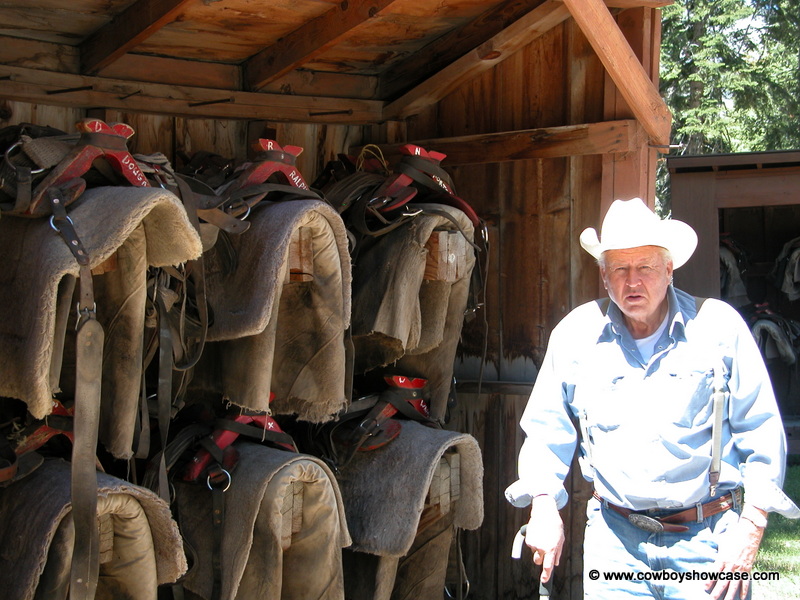
Rose Bowl Parade:
Bob Tanner is one of the largest providers of livestock for the Rose Bowl Parade in Pasadena, California each year. Bob’s mules and horses carry dignitaries and government and State officials down the parade route in this large parade. In 2003, Secretary of the Interior Gale Norton rode one of Bob’s mules. Bob’s son, Bobby Tanner, has driven the 20-mule team Borax hitch in this parade. This mule team pulled an original Borax mine wagon that weighs over 10 tons. The mule hitch was controlled with a “jerk line” and a wagon brake. The inner city kids have also ridden with Bob in the Rose Bowl parade. Bob said, ”One year they put us just behind where a fellow in a parachute jumped out of an airplane and landed in the street ahead of our mules and horses. When the man in the parachute was at eye level with the mules and horses all the animals did an about face and wanted to flee. The wranglers got them stopped.” Bob asked the parade officials why would they do this to him. The reply was, “We knew you had the best hands and best livestock with you so you could pull this off with no trouble” 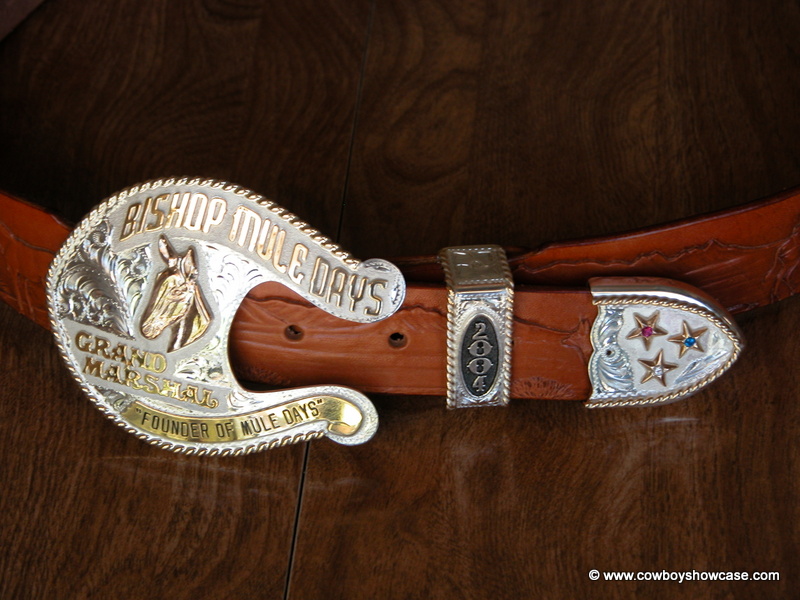
Bishop Mule Days:Beginning in 1970, Bishop, California has held a Bishop Mule Days celebration over the Memorial Day weekend to present the world’s largest and best celebration of the mule. Bob Tanner played a big role in starting this event. Here is what Bob had to say about Mule Days. “During the summer of 1969 Leo Porterfield, a mule man, and I had a discussion at Red’s Meadow. We were discussing mules and great memories of pack station life.” Bob said to Leo, ”Wouldn’t it be great if more people could see what really goes on at a pack station.” Leo agreed and said that there was beginning to be a lot of interest in mules around the country and a number of outstanding mules were being raised. This meeting led to the formation of a mule committee composed of eight mule men from the Bishop area.
The winter of 1969 was a big snow year in the Sierras. There was still snow on the trails in the high country in August. The packing business was tough and packers needed something positive to show their bankers. The Mule committee decided they would bring to town some of the hilarity of a pack station, some fine mules, and the packing and shoeing skills of the packers that worked in the Sierras. There was no event scheduled in the Bishop area over the Memorial Day weekend at that time, so this date was open. Perhaps the general public would come and see the show. Bob Tanner and others started to solicit donations from Bishop merchants. These donations helped pay for trophies, ribbons, horseshoes, and posters for this event. Mule Days has grown from this small start to a premier annual event attended by people from all over the world. In 2004, Bob Tanner was named Mule Days Grand Marshall and awarded a Mule Days trophy buckle engraved “Founder of Mule Days.” There are now plans underway to have a Mule Days Museum and a Sierra Packers Heritage Center build in Bishop. Bob Tanner is also involved in this effort. 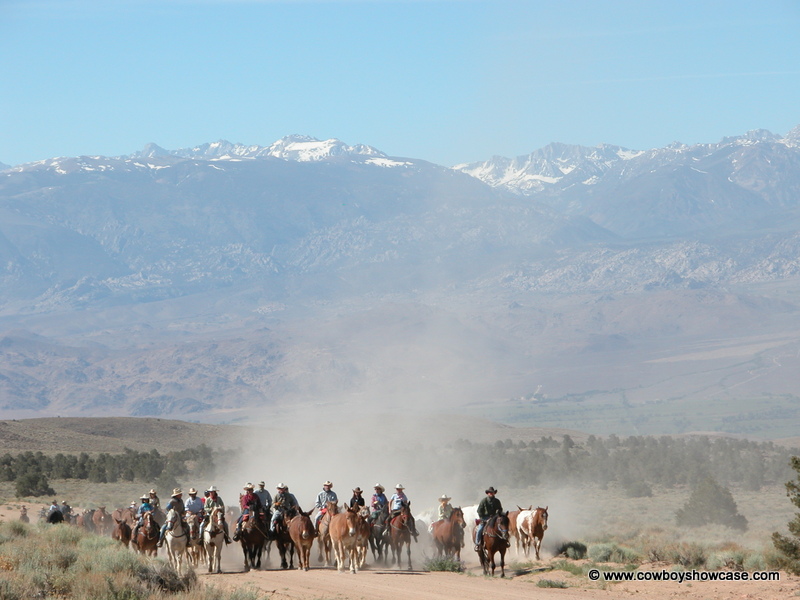
Horse and Mule Drive
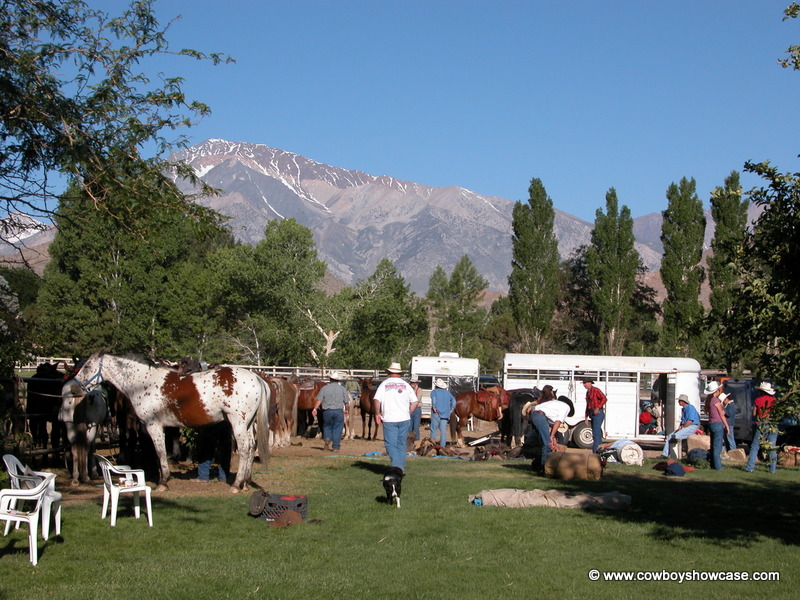
The morning following our visit with Bob, we came back to the ranch. Wranglers were busy loading camp gear, food, and feed into stock trucks. The guests were beginning to arrive. They placed their personal gear in a place where the wranglers could load it on the trucks. When everything was ready, the wranglers started mounting the guests on their assigned horses. Over 100 mules and horses had been placed in a large holding corral. When everyone was mounted up and stationed on each side of the corral gate, one of the wranglers on the ground opened the gate. Out came the horses and mules on the run. The guests fell in behind Ottie Bear, Trail Boss, who has been leading this ride for over 20 years. When last seen, this group was headed for the mountains in a cloud of dust. The first night’s camp was at a spot called Casa Diablo. The camp consisted of a wire corral, but no water. This place had at one time been a range sheep camp. Soon the water truck showed up. Water tanks were unloaded in the wire corral and hay was spread out. A kitchen commissary arrived and the cook began to put her kitchen together. A large portable grill arrived to barbeque steaks and chicken. Tables and chairs were unloaded near the commissary. Tents were unloaded for the guests to put up when they arrived. Last but not least, a portable shower wagon showed up and was set up. The whole operation was set up in less than an hour. We had a feeling that Bob’s camp crew had done all of this many times before. We drifted down country to watch the drive coming in to camp in the late afternoon. Everyone was still on their horses and the guests were having a great time pushing Bob’s horses and mules along the trail. When the drive pulled into camp, the loose horses and mules were put in the wire corral on water and feed. The wranglers and guests unsaddled their horses and placed them inside the wire corral as well. The guests started setting up their tents and finding their personal gear. Before supper was called, the guests used the shower wagon to take some of the trail dust of their bodies. This shower wagon was a high spot of their trip. Bob Tanner arrived and visited with everyone. The barbecue grill was started and a great meal was prepared. Everyone went to bed early tired out from a hard day in the saddle pushing mules and horses up the trail. Day two of the drive started out after a hearty breakfast. Horses were saddled and the Trail Boss headed them out. The first day had taken the edge of the horse and mule herd and they were easier to handle on the trail. The destination was a water storage reservoir named Crowley Lake. We headed out with the camp wranglers and followed them to the lakeshore where we helped set up camp. The same procedure was used setting up camp as the day before. The water truck showed up and water tanks and hay were placed in a wire trap where the horses and mules would overnight. In mid afternoon, we spotted riders and the loose horses and mules on the ridge above camp, headed our way. They came down a rocky hillside and into the wire trap. Horses were unsaddled and the guest set up their tents and used the shower wagon once more. Bob Tanner showed up and visited with everyone. The guests had exciting stories to tell about their second day on the drive. We had another outstanding dinner and retired to our beds. The next morning we left camp and headed for Mammoth Lake to meet Bob. The drive would take the mules and horses to corrals in Mammoth. Then they would be trucked the rest of the way to Red’s Meadow that afternoon. 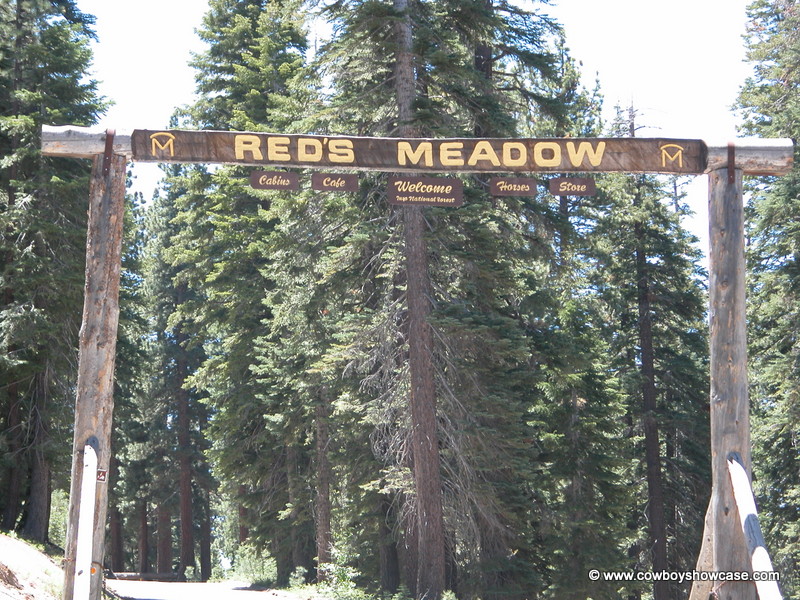
Red’s Meadow Pack Station
We met Bob in Mammoth and drove with him to Red’s Meadow Pack Station. Along the way, Bob told us some history of the area. Settlers who raised garden supplies for the miners working in this area during the l930’s had originally built at the pack station site. After the mining in the area closed down, the location was turned into a pack station. Bob has been the owner since 1960. The pack station sets at 7500-foot elevation. There is a night corral setup for the animals and pack stations where the mules are packed. Packsaddles, pads, halters, and lash ropes all have their place. There is a café called the Mule House. Gasoline, groceries, and fishing tackle are sold to the public. There are guest cabins for rent. Bob says, “A large portion of our clientele on pack trips today comprises three generations, grandparents, kids, and grandkids doing things together. Riding horseback allows them to all do things at the same speed.” Bob gave us a tour of the facility and you could sense the pride he has in his professional operation. There is no way to tell in print the amount of effort that this man has put into this operation in the last 40 years. Regrettably, Bob Tanner passed away in December 2015. Those who wish to do something to honor his memory are urged to contribute in his name to the American Mule Museum. For more information on Red’s Meadow Pack Station, the spring or fall horse drives, trail trips, or pack trips into the High Sierras contact:
Bob Tanner’s Red’s Meadow Pack Stations PO Box 395 Mammoth Lakes, California 93546 760-934-2345 800-292-7758 rmps395@aol.com Article by Mike Laughlin Photos by Lee Raine |
|

