The Last Wagon on the IL
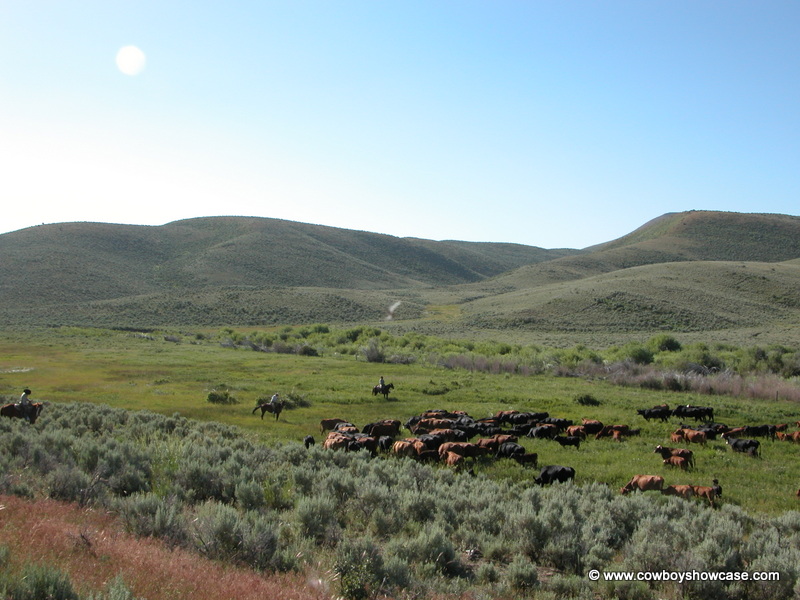
The IL Ranch is situated in a remote area of northern Nevada that has few people and is home to some of the last big ranches in the West. The IL is a "straight-up” buckaroo outfit. This means a “wagon” is used during branding time, “cavvy” horses are roped at the” ropes,” cattle are worked out of an “open rodear,” and the buckaroos have a “straight-up” riding job.
The IL covers 1,300,000 acres that begin 75 miles northwest of Elko, Nevada. The ranch headquarters sits on the South Fork of the Owyhee River. From the headquarters, it is 35 miles to the eastern boundary fence and 55 miles west to the western outside boundary fence. There are 351 miles of fence on the ranch and 151,000 acres of deeded ground. The Bureau of Land Management and the U. S. Forest Service control the rest of the land area on this ranch. In the 1870s, Isaac Laurence Requa, who made his fortune in Virginia City and Gold Hill in the mining and railroad businesses, decided to put together ranch holdings in northern Elko County which were named for his first two initials, IL. After developing the ranch, he transferred it to the Owyhee Land Association. In 1883 it was acquired by the Nevada Land and Cattle Co. Brand books of 1884 show the IL as their brand. A harsh winter in 1889-90 lead to the sale of the few remaining cattle and collapse of that company. The Antube brothers from California in 1871 came to the Independence Valley and began to put together the Spanish Ranch and acquired the IL in 1898. Two brands, still used today, the horse brand, pitchfork up, pitchfork down, and the cow brand, lazy S hanging L, are also early ranch brands. The IL was sold to the Allied Land and Livestock in the 1930s. After Allied, there have been several other owners. At one time, this ranch and their Roaring Springs Ranch in southeastern Oregon ran large numbers of sheep and cattle. In 1968, IL holdings extended from the headquarters to the Columbia Basin and had a carrying capacity of 9200 cattle and 16000 head of sheep. Agri-Beef, with their corporate office in Boise, Idaho, had this historic ranch leased during 2004. Jim Andrae was the General Manager. 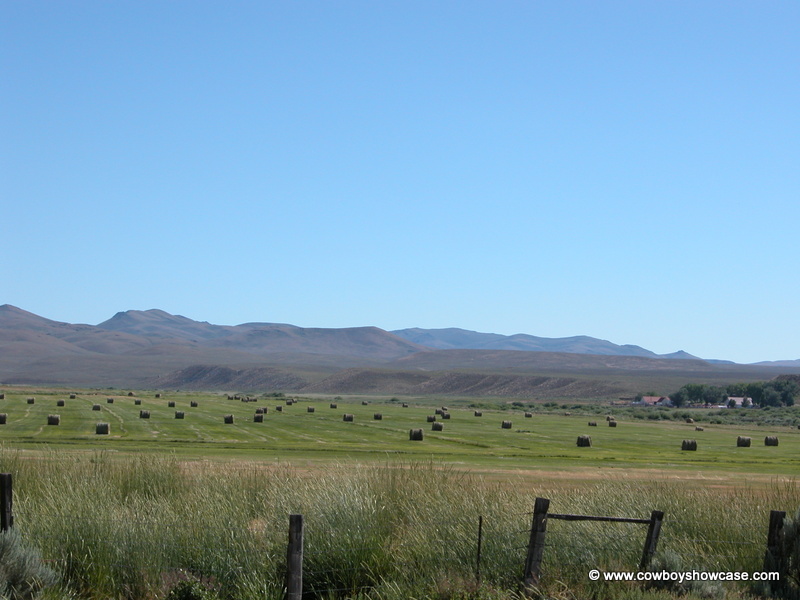
We ran into Jim Andrae and his wife Sharon in the spring of 2004 at the annual “Big Loop Contest,” Jordan Valley, Oregon, a horse roping and ranch rodeo where buckaroos from throughout the Great Basin gather each year. Jim invited us to come to the IL when the “wagon was out” and the buckaroo crew was branding calves. The IL is one of the few ranches in the west that still runs a wagon. Jim said, “You better get it down on paper and film before this way of life disappears forever.”
During the first week in July we received a phone call from Jim. He reported that the” wagon was out” and the buckaroos and the horse “cavvy” were camped in the Bull Run Field in Columbia Basin east of Blue Jacket Mountain. Jim said, “Why don’t you and Lee bring your bedrolls and tepee and come spend some time with us on the wagon.” The next day we loaded our gear, left our summer camp in the Ruby Mountains, and headed northwest from Elko into what is sometimes called the “Big Open.” We arrived at the IL headquarters that afternoon and met with General Manager Andrae. He put us in the guest cabin and in the evening we ate supper with the ranch crew (the hay crew, mechanics and irrigators, who are sometimes called rosin jaws) at the ranch cookhouse. During the evening meal Jim said, “I need to check on some cows and water out on the Owyhee Desert in the morning. See you at the cookhouse for breakfast at 6:00 am.” |
|
The Land
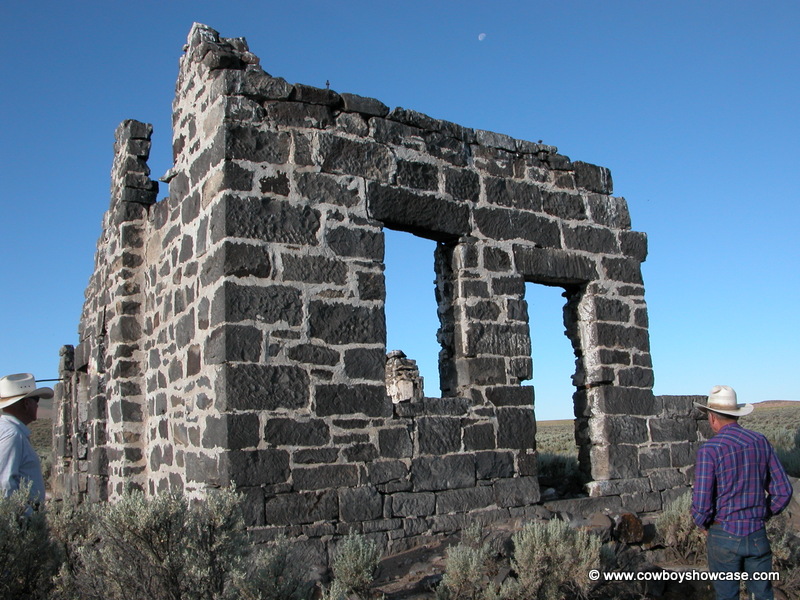
Next morning, after a hearty breakfast, we headed out with Jim in his ranch pickup. We traveled west from headquarters to an old stone house named the “Winters.” This building is a landmark in this vast high desert sagebrush country. The house had been built and lived in by the Winters family many years ago. As we left this building site Jim said, ”Notice how the sagebrush is all brown and dying? This could be caused by the 5-year drought this country has been in. This is as dry as I have ever seen this desert and I have lived in this country most of my life. We are going to wean our calves in July this year due to this drought.”
We drove on to the northwest, checking dirt water holes and seeing a few remnant cattle that still needed to be gathered. We noticed “stud piles” along side the road. Wild horse studs mark their territory by making these horse manure piles along the roads. Jim said” The Bureau of Land Management is going to make a wild horse gather using a helicopter in this area in the next couple of weeks. There is not enough water and too many horses.”
We continued to a place called the Desert Line Camp. The ranch used to keep a man in this camp to back-ride and check for cattle and unbranded calves that have been left behind when the cattle were moved off the desert to the summer country. They no longer keep a man in this line camp and the pack rats had taken over the place.
We drove on to the northwest, checking dirt water holes and seeing a few remnant cattle that still needed to be gathered. We noticed “stud piles” along side the road. Wild horse studs mark their territory by making these horse manure piles along the roads. Jim said” The Bureau of Land Management is going to make a wild horse gather using a helicopter in this area in the next couple of weeks. There is not enough water and too many horses.”
We continued to a place called the Desert Line Camp. The ranch used to keep a man in this camp to back-ride and check for cattle and unbranded calves that have been left behind when the cattle were moved off the desert to the summer country. They no longer keep a man in this line camp and the pack rats had taken over the place.
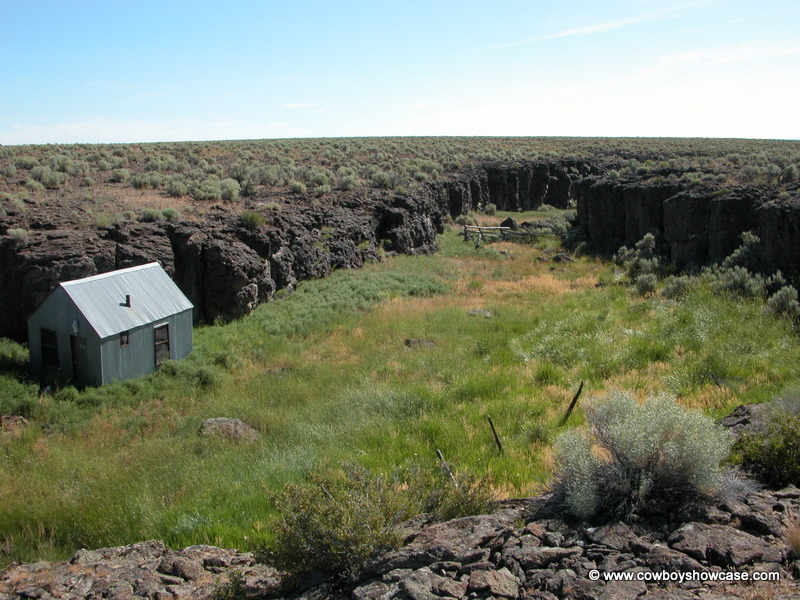
We traveled on checking water and cows until we came to another old-time buckaroo line camp called the Devil’s Corral. The old line-shack in this rocky canyon was reached by going down a wooden ladder. I mentioned to Jim, “Looks like a good place for rattlesnakes.” Jim looked down the ladder to the tin building sitting in the tall grass below and said, ”There has been a snake or two found here throughout the years.” I said, without offering to go down the ladder, “I bet you’re right!!”
We left Devil's Corral line camp and came out on a rock rim overlooking the Owyhee River Canyon and looked north across the river into the state of Idaho. This river is the north boundary of the ranch. While looking out over a vista that is hard to describe with miles of country and no people, the radiophone rang in Jim’s pickup. After he finished his call, Jim said, “Nice to have some contact with the outside world in case your pickup quits. This is one spot we get good reception.”
We left Devil's Corral line camp and came out on a rock rim overlooking the Owyhee River Canyon and looked north across the river into the state of Idaho. This river is the north boundary of the ranch. While looking out over a vista that is hard to describe with miles of country and no people, the radiophone rang in Jim’s pickup. After he finished his call, Jim said, “Nice to have some contact with the outside world in case your pickup quits. This is one spot we get good reception.”
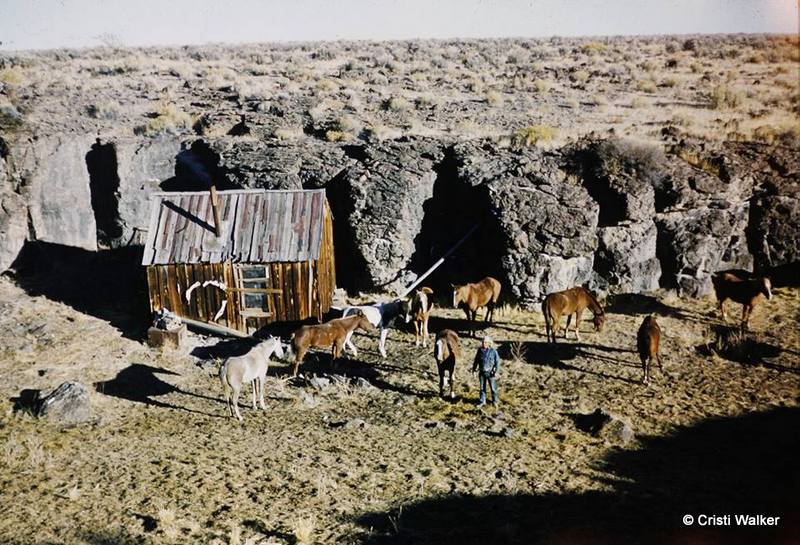
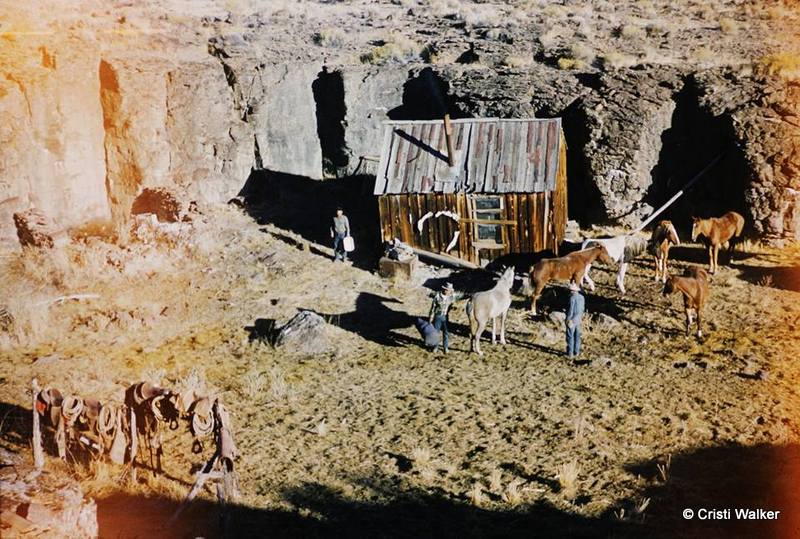
Below are two photos of the Devil's Corral camp circa 1960s with the cavvy and cowboys. Cowboys are reportedly Claude Bryson, Claude Barkdull, and Leroy Horn. Thank you to Cristi Walker for these vintage photos taken by her father.
Livestock
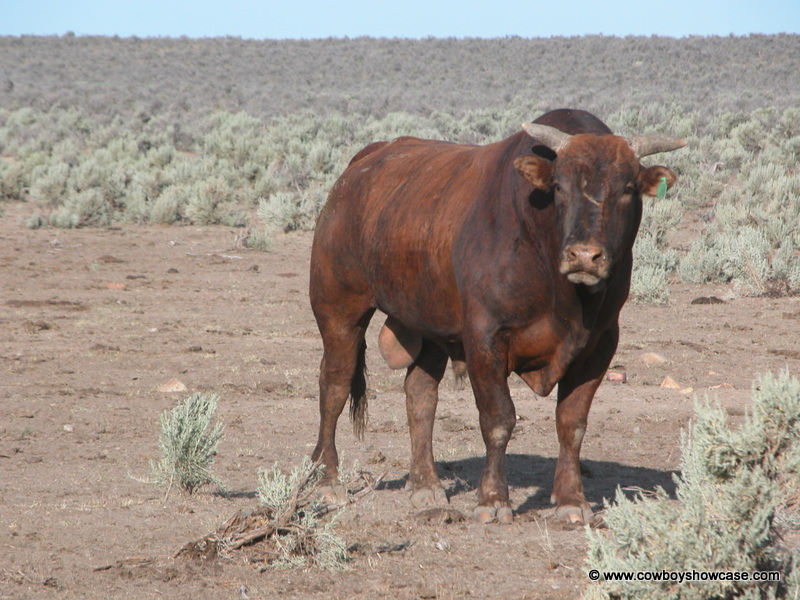
Jim told us about his livestock program on the IL as we started back toward headquarters. ” We run around 5,000 mother cows, 300 bulls, and 700 to 800 replacement heifers. Our cattle are crossbred type with some ear and we use primarily Red Angus bulls. Most years we run outside 11 months. In the summer, we run our heifers on the US Forest Service mountain permit in Columbia Basin. Once our calves are branded up and weaned in the fall, they are shipped to a “warm-up” feed lot in Idaho. We then trail the cows without calves back out on the Owyhee Desert where they spend the winter. We do put up some hay on the meadows near headquarters. This is used for feeding the replacement heifers that we calve out in the early spring. We also feed hay to our bulls and saddle horses.
“Our horse herd consists of a cavvy of 70 head of mostly grade horses. Most of these horses come from this country. We run an outside stud band from which we obtain our replacement colts. We halter break our colts when they are around a month old. We have the vet come to the ranch and put the colts to sleep when we castrate and brand. We found this is easier on the colts than roping and stretching them out. We brand with a jaw brand as well as the ranch horse brand. The horse brand is 'pitch fork up, pitch fork down.' The jaw brand is a number for the year the colt was born.”
“Years ago we used the “two-pull” method to start our colts: “Pull up your cinch and pull down your hat.” The last few years Martin Black and Bill Van Norman have helped us with our colt starting program using some of the Ray Hunt methods for starting young horses. There is nothing fancy about our horse herd but then we don’t go to horse shows with our horses. These horses are buckaroo type horses that can travel this vast country, do the miles and have enough left to get you back where you started out. When we hire a buckaroo on this outfit we assume he can ride and rope.”
We returned to the ranch headquarters, had lunch at the cookhouse, and met up with the buckaroo crew. Riley Brown, the leadoff man, was the buckaroo boss. Riley has been with Jim Andrae for 9 years and knows Jim’s ways and the ranch. Riley is married and his wife and family live at headquarters. Riley spends most of the spring and summer camped in his tepee with his crew. The rest of the crew is comprised of single men. Cain Eaton is from Montana, Jamie Hastings from California, Mike Holmes, Nevada, Pete Osborne, Oregon, and Eli Burr, Idaho. These men were loading corral panels on a flatbed trailer. We followed the buckaroo crew toward Columbia Basin. We stopped along the way and assisted in setting up the corral panels for a temporary branding trap that would be used for branding calves in the morning. We continued to the Bull Run Field and drove down to where the wagon was camped. We met the wagon cook, and then set up our tepee along Bull Run Creek in the willows near where the buckaroos had their tepees already in place. We had arrived on the IL Wagon.
“Our horse herd consists of a cavvy of 70 head of mostly grade horses. Most of these horses come from this country. We run an outside stud band from which we obtain our replacement colts. We halter break our colts when they are around a month old. We have the vet come to the ranch and put the colts to sleep when we castrate and brand. We found this is easier on the colts than roping and stretching them out. We brand with a jaw brand as well as the ranch horse brand. The horse brand is 'pitch fork up, pitch fork down.' The jaw brand is a number for the year the colt was born.”
“Years ago we used the “two-pull” method to start our colts: “Pull up your cinch and pull down your hat.” The last few years Martin Black and Bill Van Norman have helped us with our colt starting program using some of the Ray Hunt methods for starting young horses. There is nothing fancy about our horse herd but then we don’t go to horse shows with our horses. These horses are buckaroo type horses that can travel this vast country, do the miles and have enough left to get you back where you started out. When we hire a buckaroo on this outfit we assume he can ride and rope.”
We returned to the ranch headquarters, had lunch at the cookhouse, and met up with the buckaroo crew. Riley Brown, the leadoff man, was the buckaroo boss. Riley has been with Jim Andrae for 9 years and knows Jim’s ways and the ranch. Riley is married and his wife and family live at headquarters. Riley spends most of the spring and summer camped in his tepee with his crew. The rest of the crew is comprised of single men. Cain Eaton is from Montana, Jamie Hastings from California, Mike Holmes, Nevada, Pete Osborne, Oregon, and Eli Burr, Idaho. These men were loading corral panels on a flatbed trailer. We followed the buckaroo crew toward Columbia Basin. We stopped along the way and assisted in setting up the corral panels for a temporary branding trap that would be used for branding calves in the morning. We continued to the Bull Run Field and drove down to where the wagon was camped. We met the wagon cook, and then set up our tepee along Bull Run Creek in the willows near where the buckaroos had their tepees already in place. We had arrived on the IL Wagon.
The IL Wagon
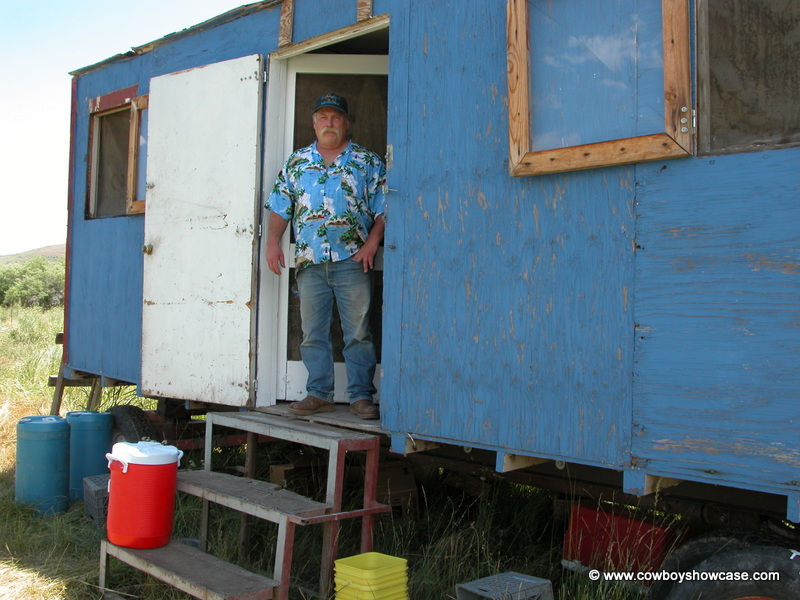
The wagon is a homemade, self-contained, pull type, cook wagon, with plenty of ground clearance for moving around in rough country. Years ago, these wagons were pulled by a team of horses. Teams have been replaced by pickups. Inside, the wagon has a fold down table, propane stove for cooking and baking, a propane refrigerator for keeping meat & vegetables, and a propane lantern for light. The inside was big enough to accommodate the buckaroo crew and the cook at meal times. Jim Fowler was the cook and had cooked on this wagon before. Jim had also cooked for big game outfitters in Colorado.
The advantage of using a wagon is very obvious. Camping near where your cattle need to be worked is much more efficient. Camping your buckaroo crew with the cattle saves hours of hauling horses in gooseneck trailers over millions of acres on rough dirt roads. The system Jim Andrae and his crew have set up was fairly simple. The buckaroo crew set up camp with the wagon. The horse cavvy was pastured there, too. The crew set up the “ropes” where the horses were gathered by the horse wrangler and pushed in at a walk. The “ropes” have 11 metal stakes driven into the ground 30 feet apart. The back end of the ropes is left open. When the horses come into the open end they line up side by side with their chests against the ropes, and their heads out. The buckaroos lined up in the open end with halters in hand. The buckaroo boss, Riley Brown, an excellent roper, roped out the horse called for by each buckaroo. Roping is done from behind the horse with a style loop called a “hoolihan.” Once the horse is roped, it is lead out by Riley to the open end of the ropes where the buckaroo slips his halter on and Riley’s rope is removed from the horse’s head. This procedure is repeated until each man has a horse. During this time of year the horses for the next day are roped in the afternoon before supper. These roped horses are put in a “ketch pen ” for the night and fed hay. Doing it this way saves valuable time the next morning. The buckaroos can be gone at daylight in the morning right after breakfast because the next day’s horses are all caught and ready to be saddled. They can get their work done before the day begins to heat up. Cattle are easier to handle when it is cool. Later on, in the fall and winter, when the weather cools down, the horses will be roped in the mornings.
The advantage of using a wagon is very obvious. Camping near where your cattle need to be worked is much more efficient. Camping your buckaroo crew with the cattle saves hours of hauling horses in gooseneck trailers over millions of acres on rough dirt roads. The system Jim Andrae and his crew have set up was fairly simple. The buckaroo crew set up camp with the wagon. The horse cavvy was pastured there, too. The crew set up the “ropes” where the horses were gathered by the horse wrangler and pushed in at a walk. The “ropes” have 11 metal stakes driven into the ground 30 feet apart. The back end of the ropes is left open. When the horses come into the open end they line up side by side with their chests against the ropes, and their heads out. The buckaroos lined up in the open end with halters in hand. The buckaroo boss, Riley Brown, an excellent roper, roped out the horse called for by each buckaroo. Roping is done from behind the horse with a style loop called a “hoolihan.” Once the horse is roped, it is lead out by Riley to the open end of the ropes where the buckaroo slips his halter on and Riley’s rope is removed from the horse’s head. This procedure is repeated until each man has a horse. During this time of year the horses for the next day are roped in the afternoon before supper. These roped horses are put in a “ketch pen ” for the night and fed hay. Doing it this way saves valuable time the next morning. The buckaroos can be gone at daylight in the morning right after breakfast because the next day’s horses are all caught and ready to be saddled. They can get their work done before the day begins to heat up. Cattle are easier to handle when it is cool. Later on, in the fall and winter, when the weather cools down, the horses will be roped in the mornings.
The IL Cavvy
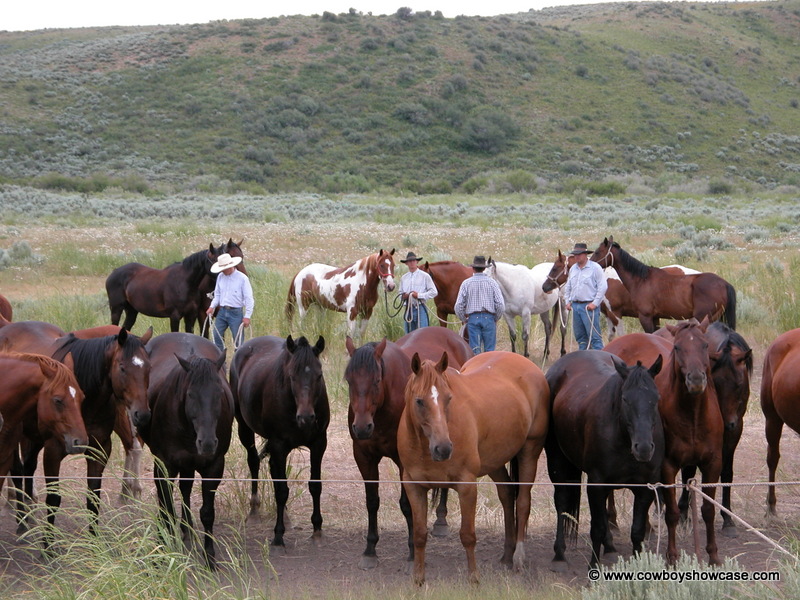
Buckaroo Boss Riley Brown assigns 6-8 horses to each mans “string.” During busier parts of the year this string of horses may be increased to 9 or 10 per man. This will depend on how each man rides and how the horses hold up.
The IL horse cavvy carries “cavvy marks.” This means the mane is clipped in a certain way above the withers. Two tufts of mane hair indicate that the horse is a bridle horse, one tuft indicates a two-rein horse, and if the mane is clipped smooth on top of the withers, the horse is snaffle bit horse. This procedure is done so that a new buckaroo boss could step in and would know what to expect of the horses. Also, if one of these cavvy horses is lost to a wild horse herd, the horse could be identified at a distance and be gathered.
The IL horse cavvy carries “cavvy marks.” This means the mane is clipped in a certain way above the withers. Two tufts of mane hair indicate that the horse is a bridle horse, one tuft indicates a two-rein horse, and if the mane is clipped smooth on top of the withers, the horse is snaffle bit horse. This procedure is done so that a new buckaroo boss could step in and would know what to expect of the horses. Also, if one of these cavvy horses is lost to a wild horse herd, the horse could be identified at a distance and be gathered.
The Buckaroos
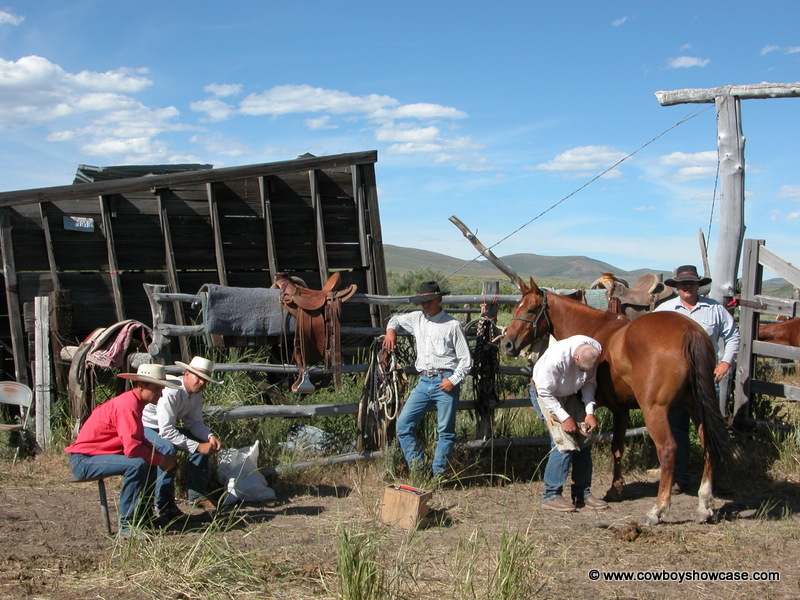
A buckaroo’s job on this ranch is a “straight up riding job.” The buckaroos are not expected to fix fence, irrigate, or hay. These men ride six days a week and sometimes seven, tending cattle in rain, sleet, snow, and sun. The work is physically demanding. The weather and the miles take their toll on men and animals. There is very little social life in this big empty country. A trip to be “social” in the nearest town of Elko is more than 75 miles one way. Sometimes this trip can very difficult if the weather and roads turn bad. This is one reason single buckaroos move from ranch to ranch. As one of these men told me, ”You may have to roll up and quit to get a day off on one of these outfits.” Most of these men are fiercely proud of their occupation. They enjoy their way of life despite low pay, no social life, long hours in the saddle, and being at the mercy of Mother Nature.
Buckaroo Gear
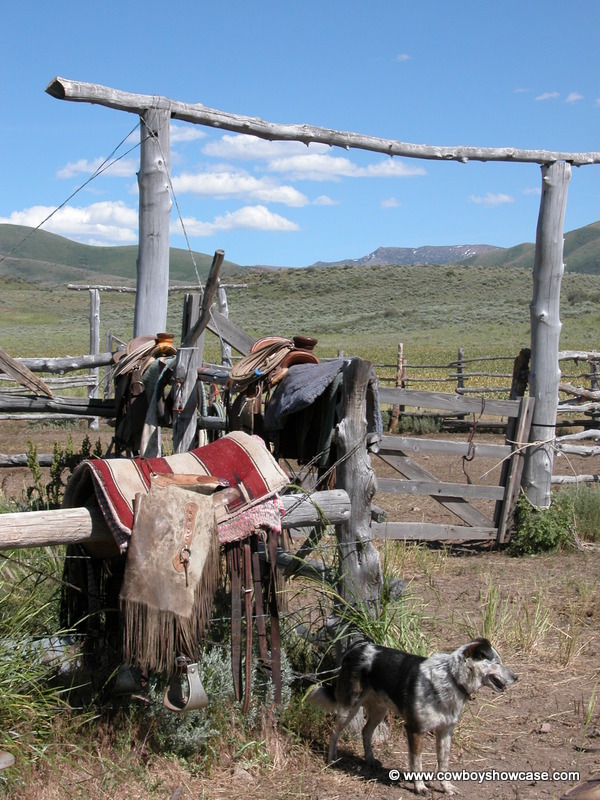
The IL Buckaroos all rode slick fork saddles, some with bucking rolls. Most of the saddles were single rigged. Wade trees were preferred. Most carried a 60-foot rope with a metal or rawhide hondo. There is no rubber on the saddle horn in buckaroo country. The horns are wrapped with mule hide or deer skin. Snaffle bits with a McCarty setup were used. All of these men wore buckaroo chinks for leg protection while branding and riding through the high sagebrush. Several of the “flat hats” that are popular in the Great Basin were used for headgear. No water canteens or lunches are carried by buckaroos on their saddles. The men all eat a hearty breakfast and that is it until the evening meal.
Branding
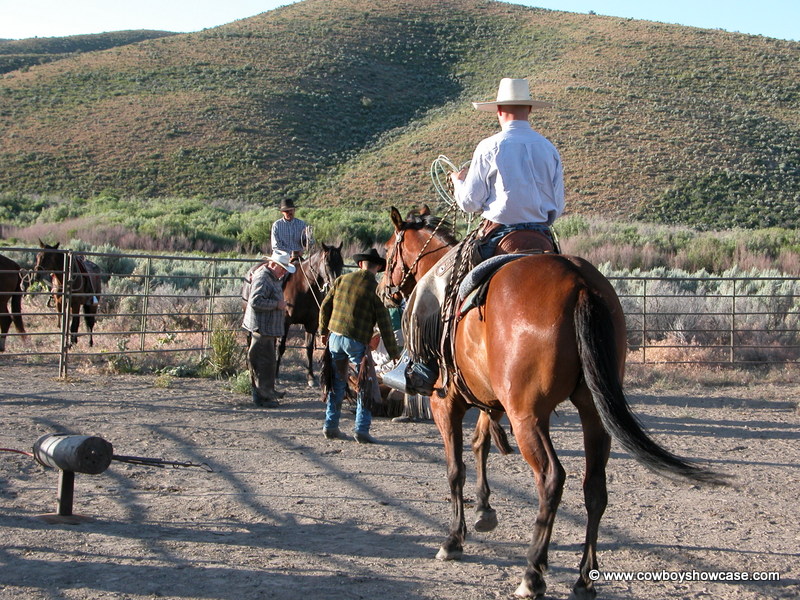
In the morning, we all ate a big breakfast before daylight. The only light in the wagon was a single mantle propane lantern. Everyone was very polite to the cook and made sure that they all said thank you for breakfast. When Riley got up and headed for his horse in the ketch pen, all of his men followed him out the wagon door toward their horses. After saddling their horses, the buckaroos all followed the buckaroo boss. There is a firm rule in buckaroo country ”never ride in front of the buckaroo boss.” He cut them each a circle to ride in order to gather cows and calves that were on the meadows below where we were camped.
Lee and I headed for the portable branding corral we had helped set up the day before. We met Jim Andrae there. He had driven from headquarters to help with the day’s branding. The buckaroo crew could be seen coming up the meadow with cow and calves, pushing them toward the branding trap. When all the cows and calves were in the branding trap, the branding pots were lit from a propane tank and the irons were heated. Two men remained on horseback inside the trap and started roping calves. The rest of the men hobbled their horses outside the branding trap and worked on the ground. Everyone got a chance to rope and a chance to work on the ground.
These were good-sized calves so they were headed and heeled. The header would neck a calf (rope around the neck.) The heeler would move in and take his shot, then the calf was stretched out. The rope was removed from around the neck and placed on the front feet of the calf by the ground crew. This is the Nevada way of branding bigger calves. Jim Andrae castrated the bull calves, a 4-way shot was given, year brand was placed on the replacement heifers on their front shoulder, and the right ear was marked on the steer calves so they could be seen in a sorting alley when the calves were weaned. All calves were branded with the ranch brand on the left hip, and their left ears earmarked. When the last calf was branded, the cows and calves were let out of the trap and held up by the buckaroos until every thing was “straight,” meaning all the cows had claimed their own calf.
Then the cattle were driven back up the meadow and put through a gate into another field. The buckaroo crew headed back toward the wagon at a long trot. When they reached the wagon, their horses were unsaddled. The rest of the afternoon some of the men shod the horse they had used that day. Buckaroos are responsible for shoeing the horses in their string. Some of the others worked on their gear. Toward evening the wrangle man went out on horseback and brought in the cavvy to the ropes. Riley Brown roped out the next day’s horses and they were placed in the ketch pen. We were then called to eat at the wagon. The cook had lots meat and potatoes, with homemade gravy, bread and had baked a couple of pies. What a feed we took on. We all thanked the cook for a great meal and retired to our tepees.
When you are camped with the “wagon,” after dark, lying in your bedroll in your tepee, you can hear the cattle bawling and the cavvy horses moving around near the camp nickering to each other. You can still smell the smoke from the burnt calf hair at the branding fire. You can feel the tradition of a way of life that has been in this country for over 100 years. These young men and a general manager who cares have carried on this tradition with pride and passion.
Lee and I headed for the portable branding corral we had helped set up the day before. We met Jim Andrae there. He had driven from headquarters to help with the day’s branding. The buckaroo crew could be seen coming up the meadow with cow and calves, pushing them toward the branding trap. When all the cows and calves were in the branding trap, the branding pots were lit from a propane tank and the irons were heated. Two men remained on horseback inside the trap and started roping calves. The rest of the men hobbled their horses outside the branding trap and worked on the ground. Everyone got a chance to rope and a chance to work on the ground.
These were good-sized calves so they were headed and heeled. The header would neck a calf (rope around the neck.) The heeler would move in and take his shot, then the calf was stretched out. The rope was removed from around the neck and placed on the front feet of the calf by the ground crew. This is the Nevada way of branding bigger calves. Jim Andrae castrated the bull calves, a 4-way shot was given, year brand was placed on the replacement heifers on their front shoulder, and the right ear was marked on the steer calves so they could be seen in a sorting alley when the calves were weaned. All calves were branded with the ranch brand on the left hip, and their left ears earmarked. When the last calf was branded, the cows and calves were let out of the trap and held up by the buckaroos until every thing was “straight,” meaning all the cows had claimed their own calf.
Then the cattle were driven back up the meadow and put through a gate into another field. The buckaroo crew headed back toward the wagon at a long trot. When they reached the wagon, their horses were unsaddled. The rest of the afternoon some of the men shod the horse they had used that day. Buckaroos are responsible for shoeing the horses in their string. Some of the others worked on their gear. Toward evening the wrangle man went out on horseback and brought in the cavvy to the ropes. Riley Brown roped out the next day’s horses and they were placed in the ketch pen. We were then called to eat at the wagon. The cook had lots meat and potatoes, with homemade gravy, bread and had baked a couple of pies. What a feed we took on. We all thanked the cook for a great meal and retired to our tepees.
When you are camped with the “wagon,” after dark, lying in your bedroll in your tepee, you can hear the cattle bawling and the cavvy horses moving around near the camp nickering to each other. You can still smell the smoke from the burnt calf hair at the branding fire. You can feel the tradition of a way of life that has been in this country for over 100 years. These young men and a general manager who cares have carried on this tradition with pride and passion.
The Future
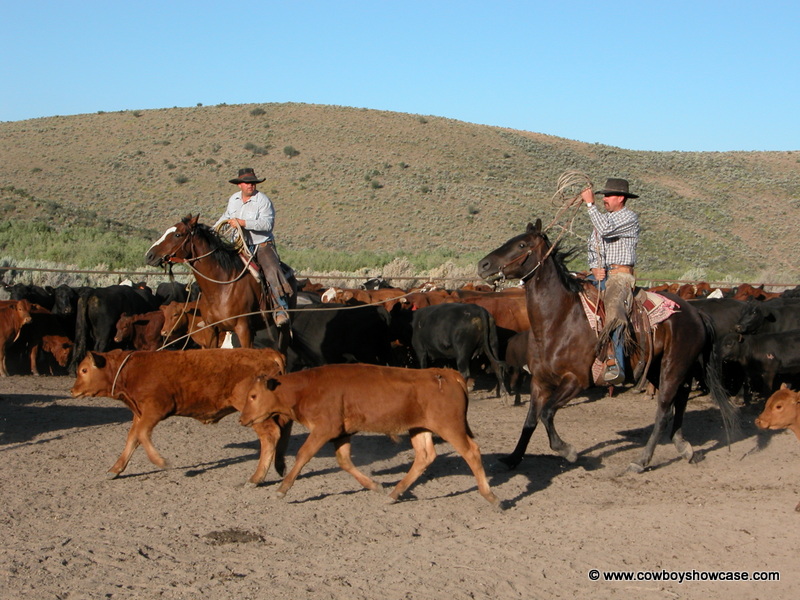
This branding cycle would be repeated for several months until all of the IL calves were branded up. The wagon would then pull in to headquarters. In the fall, the buckaroos would start gathering the heifers from the US Forest Service Mountain permit, calves would be weaned and shipped, and the mother cows trailed back out on the Owyhee Desert. Winter would set in, but by normally in February and early March, first calf heifers would start calving. The livestock cycle on the IL would start all over once again.
However, just as Jim had sensed, things changed on the IL in the fall of 2004. The calves were shipped that fall, as usual, but so were the mother cows and replacement heifers. The sheep are gone, as well. All the grazing leases were relinquished.
The IL wagon is gone, the cavvy sold, the bunkhouse razed. Life on the IL Ranch, as generations of buckaroos knew it, is over. Other outfits may take over the leases, the ranch may be sold. Jim summed things up succinctly, " We don't know what the future holds."
However, just as Jim had sensed, things changed on the IL in the fall of 2004. The calves were shipped that fall, as usual, but so were the mother cows and replacement heifers. The sheep are gone, as well. All the grazing leases were relinquished.
The IL wagon is gone, the cavvy sold, the bunkhouse razed. Life on the IL Ranch, as generations of buckaroos knew it, is over. Other outfits may take over the leases, the ranch may be sold. Jim summed things up succinctly, " We don't know what the future holds."
Jim Andrae, Stockman
Retired General Manager, IL Ranch – Nevada
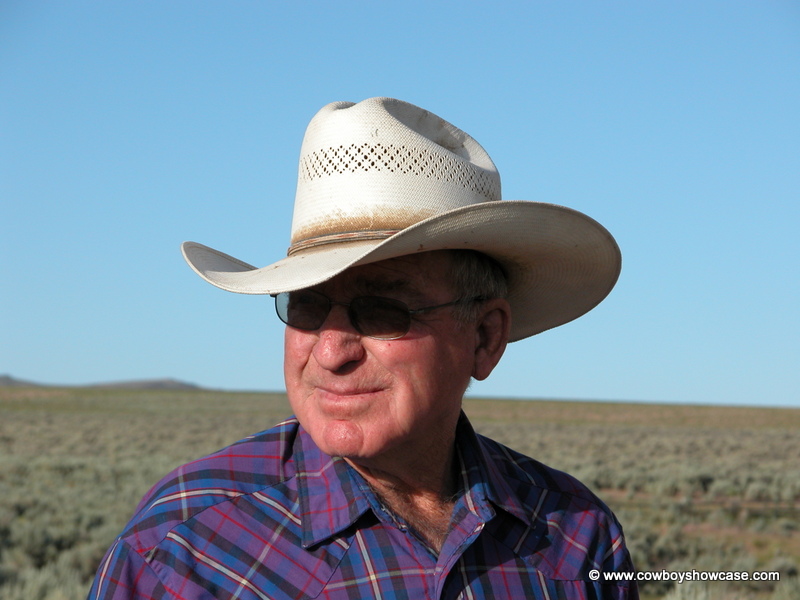
Jim Andrae was born in Mountain City, Nevada and has spent his entire life working on various ranches throughout the state of Nevada. As a young boy, Jim would saddle his horse each morning after doing ranch chores and ride to the country schoolhouse on the Spanish Ranch. After high school, Jim had an opportunity to attend Cal Poly State University in California. Mrs. Jackson, owner on the Petan, YP ranch, which neighbors the IL Ranch, was so impressed with Jim’s horse handling abilities that she offered to pay for Jim’s education. The deal was made for Jim to ride Mrs. Jackson’s polo horses in California while he was attending college. After completing his college studies, Jim went to work on the IL ranch. He met his wife Sharon on the ranch. She was the daughter of the General Manager at that time. She has been at Jim’s side for the past 43 years. Jim was the buckaroo boss on the IL for nine years. The Andrae family then moved to Smith Valley in western Nevada. Their son Rick attended school there and Jim managed a ranch. He and his family then moved to the TS Ranch near Battle Mountain, Nevada and took over as General Manager. In 1991, Jim and Sharon moved back to the IL Ranch and Jim assumed the role of General Manager. He was on the IL ever since.
Horses, cattle, and working with young men are what Jim enjoys. He has brought a lot of talent and experience to the ranching business. Jim is highly respected by the ranching community and the men who work for him. His reputation was built the old fashioned way, by working at it every day. Whether calving heifers in below-zero weather, branding calves, or starting colts he is always there, on the ground, leading his crew. Jim Andrae knows the Owyhee Desert country like no other man alive today. Jim Andrae is a real stockman.
Also see our oral history page with a link to Andrae - Marvel - Nevada Oral Histories
Article by
Mike Laughlin
Photos by Lee Raine
Sadly, Jim Andrae has passed away.
James “Jim” Andrae, 83, living in Spring Creek, NV passed away October 24, 2016. Jim was born to Arthur and Sadie Andrae on February 14, 1933 and served honorably in the Korean War. He married Sharon Lee (Smith) Andrae on December 29, 1958.
Horses, cattle, and working with young men are what Jim enjoys. He has brought a lot of talent and experience to the ranching business. Jim is highly respected by the ranching community and the men who work for him. His reputation was built the old fashioned way, by working at it every day. Whether calving heifers in below-zero weather, branding calves, or starting colts he is always there, on the ground, leading his crew. Jim Andrae knows the Owyhee Desert country like no other man alive today. Jim Andrae is a real stockman.
Also see our oral history page with a link to Andrae - Marvel - Nevada Oral Histories
Article by
Mike Laughlin
Photos by Lee Raine
Sadly, Jim Andrae has passed away.
James “Jim” Andrae, 83, living in Spring Creek, NV passed away October 24, 2016. Jim was born to Arthur and Sadie Andrae on February 14, 1933 and served honorably in the Korean War. He married Sharon Lee (Smith) Andrae on December 29, 1958.
Elko Land and LivestockCompany (ELLCo), a subsidiary of Newmont Mining, now owns and operates several ranches in Nevada. Including the TS, Horseshoe, Big Springs and IL.
- TS Ranch - Eureka and Lander counties
- Horseshoe Ranch - Northern Eureka County
- Big Springs Ranch - Elko County
- IL Ranch - Elko, Pershing and Humboldt counties

