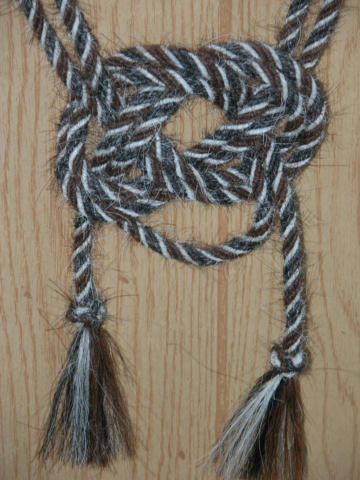
| ALAMAR KNOT: decorative
knot used to tie a mecate around a horse's neck. In
traditional Old California horse training, when a horse had graduated to
become a finished bridle horse, the
alamar knot was tied from
two coils of a mane hair mecate draped over the horse's neck and
the knot worn on the horse's chest
to denote him as a bridle horse. |
 |
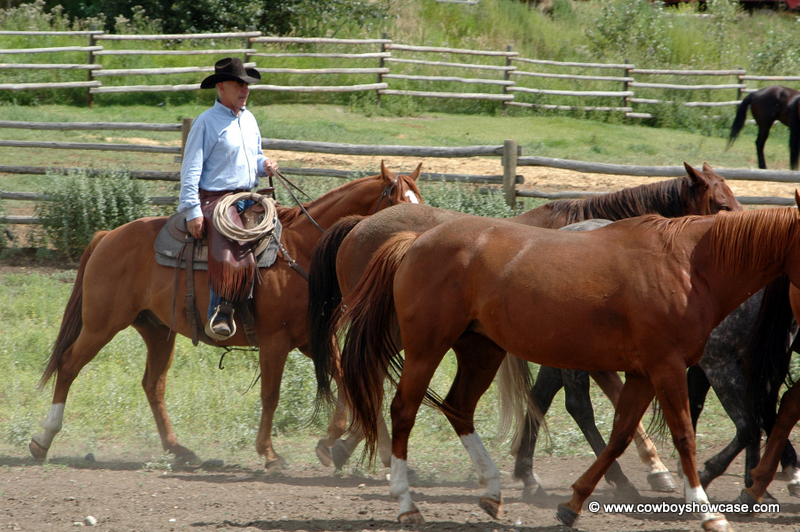
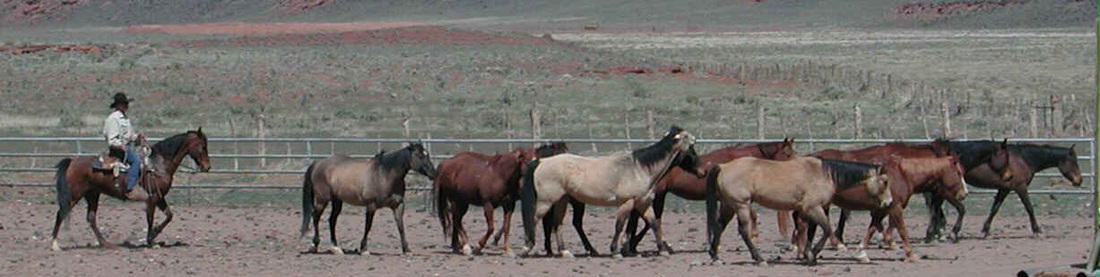
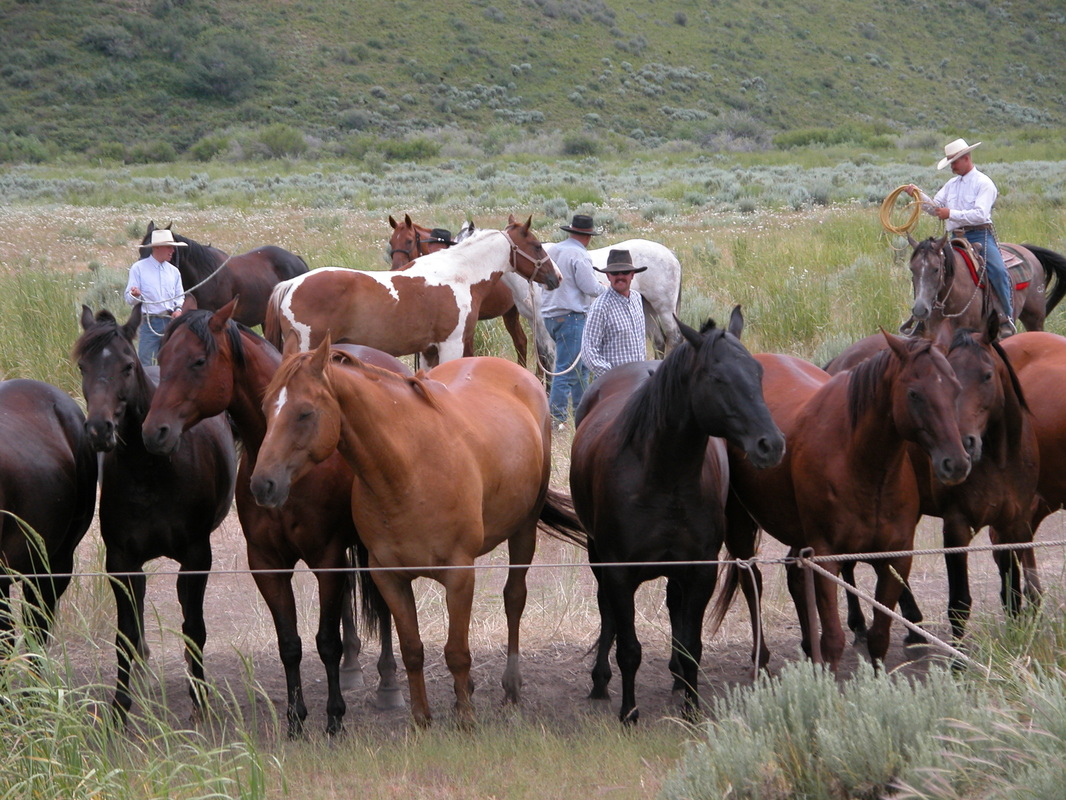
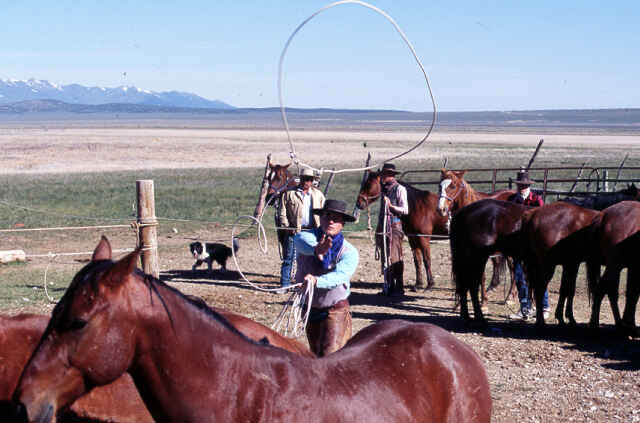
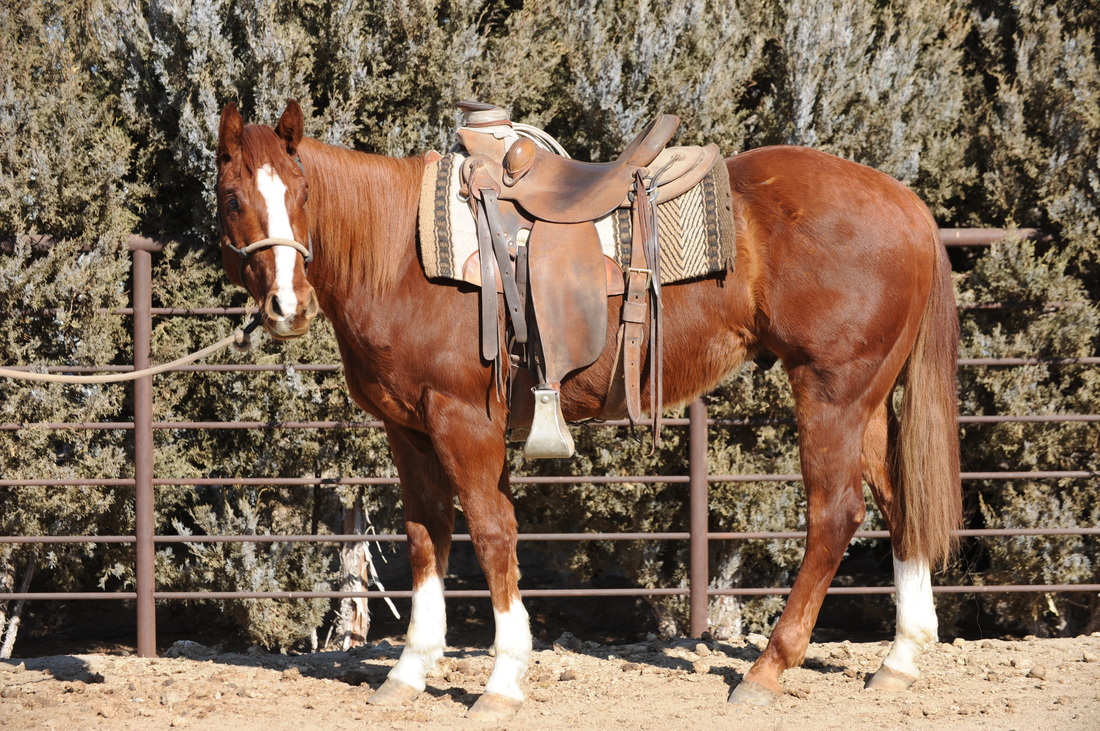
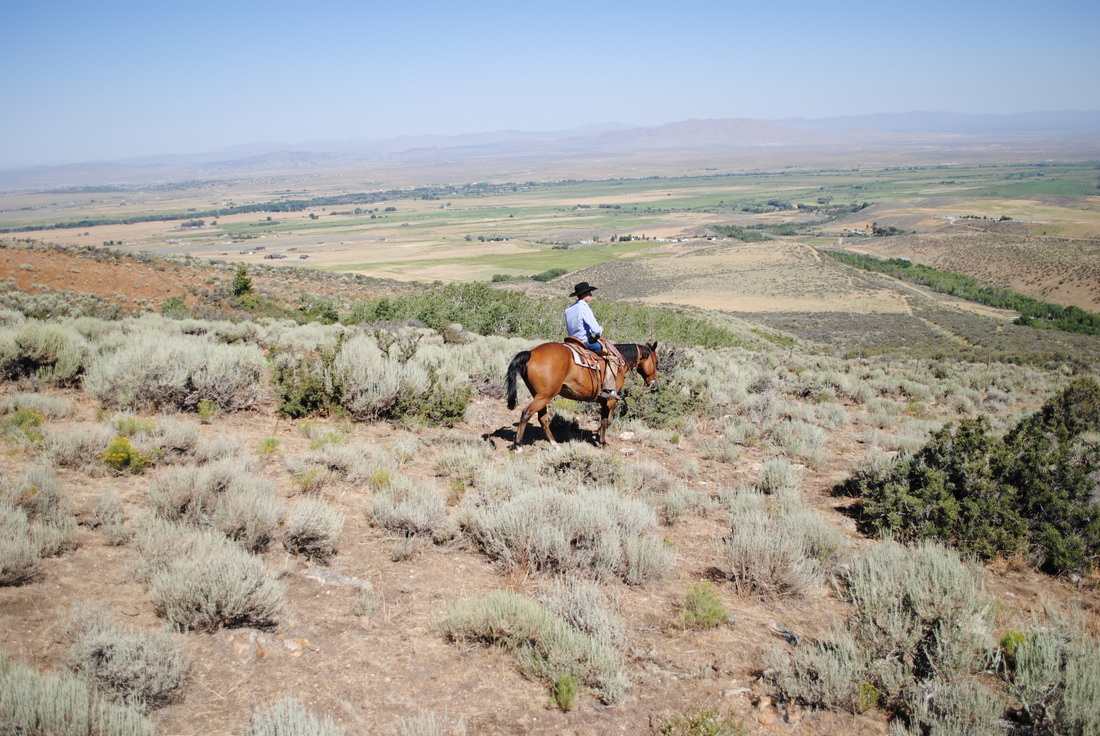
| At the ropes: horses are
gathered at a ranch into a rope corral. They are trained to
stand with their heads facing the rope and and are roped by the
jigger or cowboss for the cowboys from behind using a hoolihan loop.
The cowboy asks for his horse for the day according to the work to
be done. |
 |
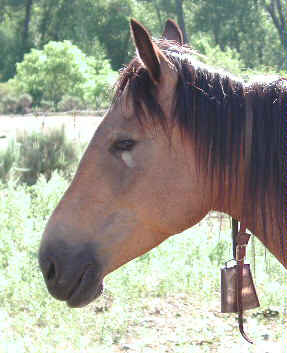
| Bell
Mare:
generally older
mares wearing a bell, used
as leaders in pack trains or
put in a remuda to locate where horses are grazing at night.
|
 |
Bell: To trim an
animal's tail into a distinctive bell shaped pattern.
Often used on mules. The pattern is used for
identification, for instance to show where a horse or
mule should be in a pack string.
|
|
Broom-tail: a class of
range horses that are
considered not worth much.
|
|
|
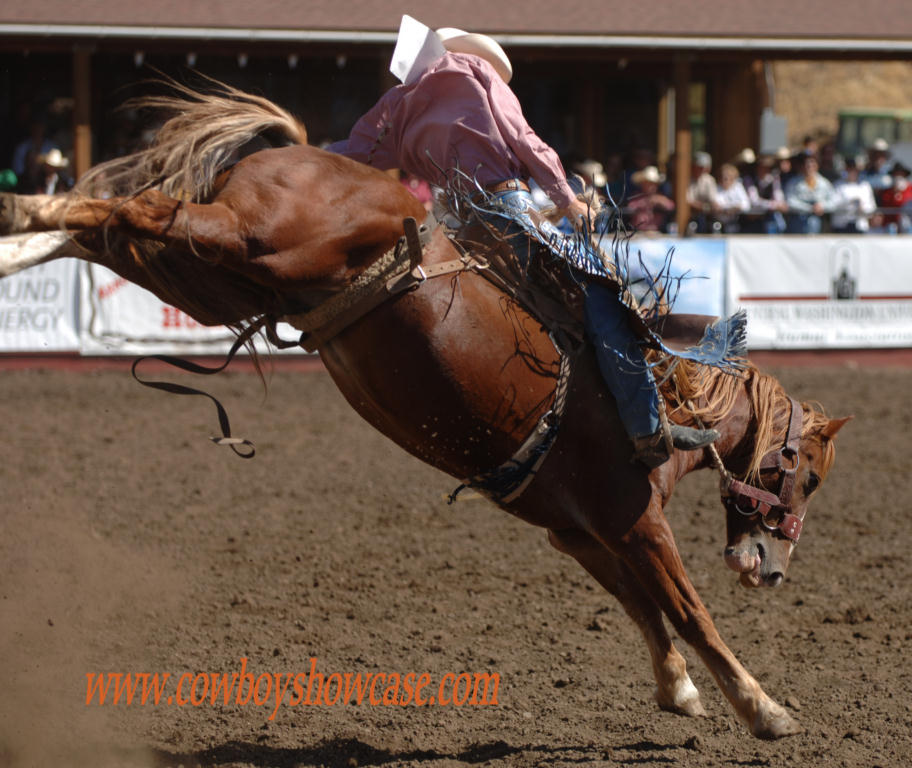
Bronco: an animal that has
never been broken to saddle
or harness use. Also bronc.
(Spanish: rough)
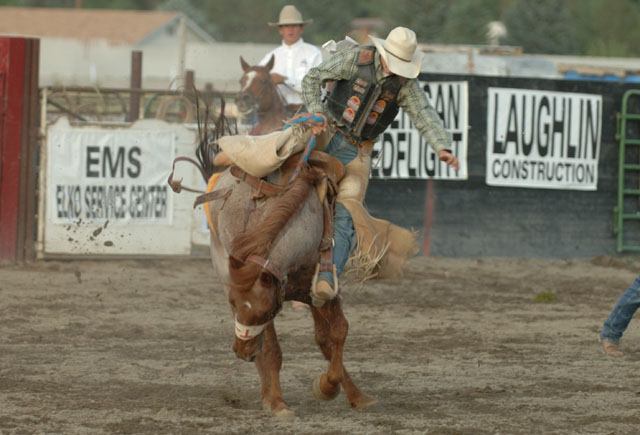
Bronc: Rodeo term used to designate the bucking horses that
are ridden with a saddle. |
 |
|
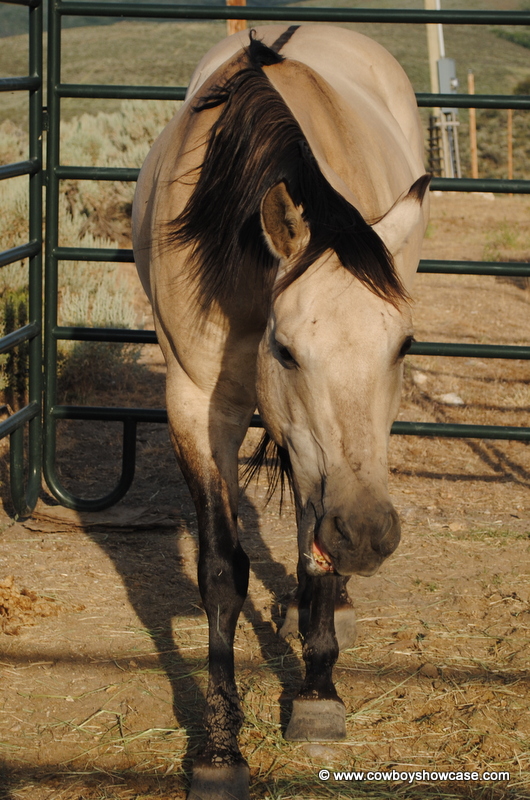
Buckskin:
a tan or yellow colored horse with black mane
& tail. |
|
(Caballada): Spanish
for a band of horses. Saddle horses maintained by a
ranch. Also see remuda or cavvy.
|
|
(Caballo):
Spanish for horse
|
|
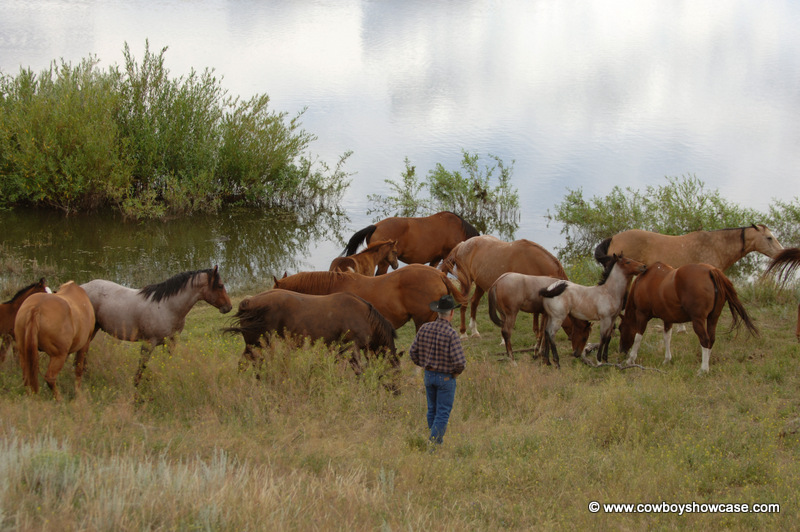
Cavvy:
(caviada) Buckaroo term for a ranch outfit's saddle horses.
The cavvy horses are gathered by a horse wrangler and brought
"to the ropes." This is a rope corral, sometimes
temporary, at which the "day horses" are roped. The
jigger boss, second in command, does the roping. The buckaroo
calls out which horse he wants based on the instructions the cow
boss has given for the day's work. Term used mainly in
the Great Basin and northwest.
|
 |
Cayuse: a range-bred horse.
|
|
Cold-backed: A horse
that has a tendency to buck when initially mounted in the
morning.
|
 |
Cow horse: a horse that
is trained to roping, cutting,
working out a cow-herd.
Cow sense: What a horse
has when it has
a natural ability to use for
roping, cutting and general
cow work.
|
 |
Critter: often in speaking
of cows or horses a cowboy
calls them a
"Critter."
Other animals can also be
critters.
|
|
Croup: The croup is the rump of
the horse, the
top of the hind quarters from the tail to the kidney area (loin).
|
 |
Cutting horse: certain
cow-horses used at a
round-up in cutting out
cattle for ownership and
brand; today, a whole branch
of horsemanship and horse
use.
|
|
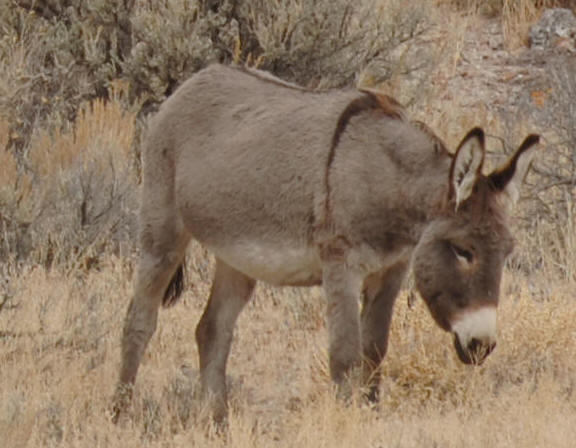
Donkey: common name for
a member of the ass family. The Spanish brought
donkeys, called "burros" in Spanish, to North America
beginning in the late fifteenth century. They were the
favored beast of burden used by prospectors in the desert
Southwest of the United States.
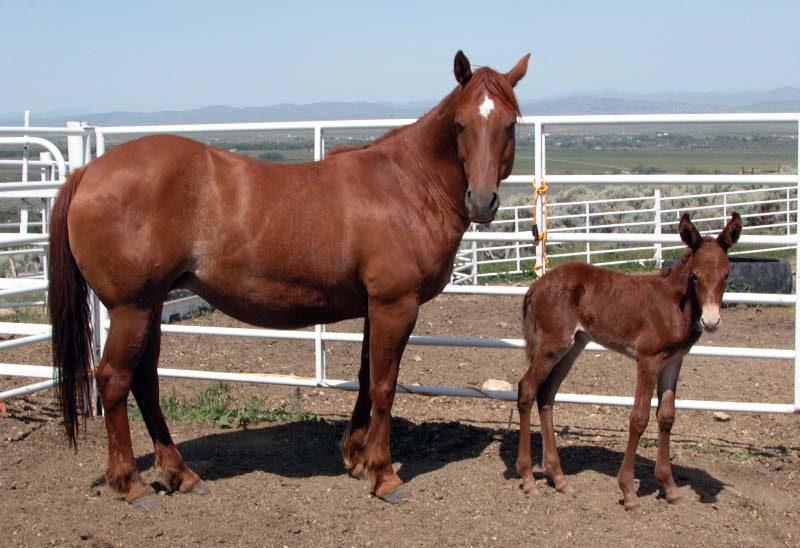
A male donkey (jack) can be crossed with a female
horse to produce a mule. A male horse can be crossed
with a female donkey (jennet or jenny) to produce a
hinny.
|
 |
Dun: "Dun factor doesn't not
mean dun color, it's a type of gene inheritance. Dun factor acts on the base
coat color and usually lightens it a shade or two. Also, many dun factor
horses have a stripe down the back and lines on the legs, neck, and ear
tips, etc." courtesy of Kathy Kadash-Swan
|
|
| Flaxey: Blonde colored
or flaxen mane or tail on a horse. |
|
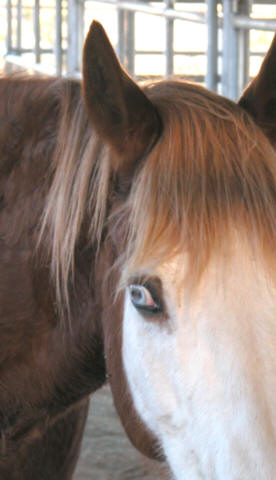
| Glass-eyed: Blue or white eyed
horse.
An old-wives' tale says blue-eyed
horses do not see well or are night blind, but most see as
well as any other horse. |
 |
Gouch eared: Having
ragged or cropped ears. Sometimes a horse will lose part of an
ear to frostbite or an accident.
|
|
|
Gelding: it is a range
custom to let a male colt run
on the range until he becomes a
2-year old. He is then
castrated and becomes a
gelding. |
|
|
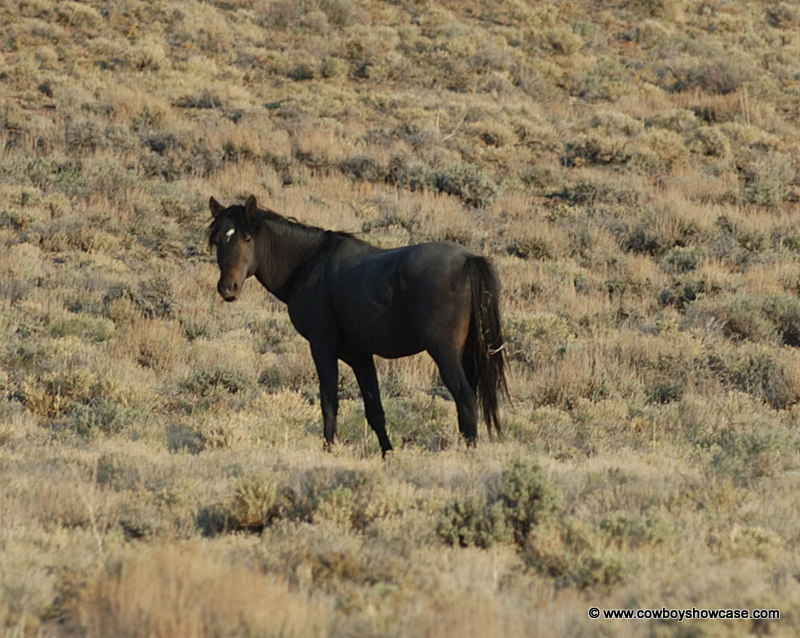
Grulla: (pronounced groo-ya) a mouse colored
horse, a mousy-dun.
The dun version of a black horse.
(Mexican: grullo) Note the dark dorsal stripe, tiger
striped legs and white ear tips. |
 |
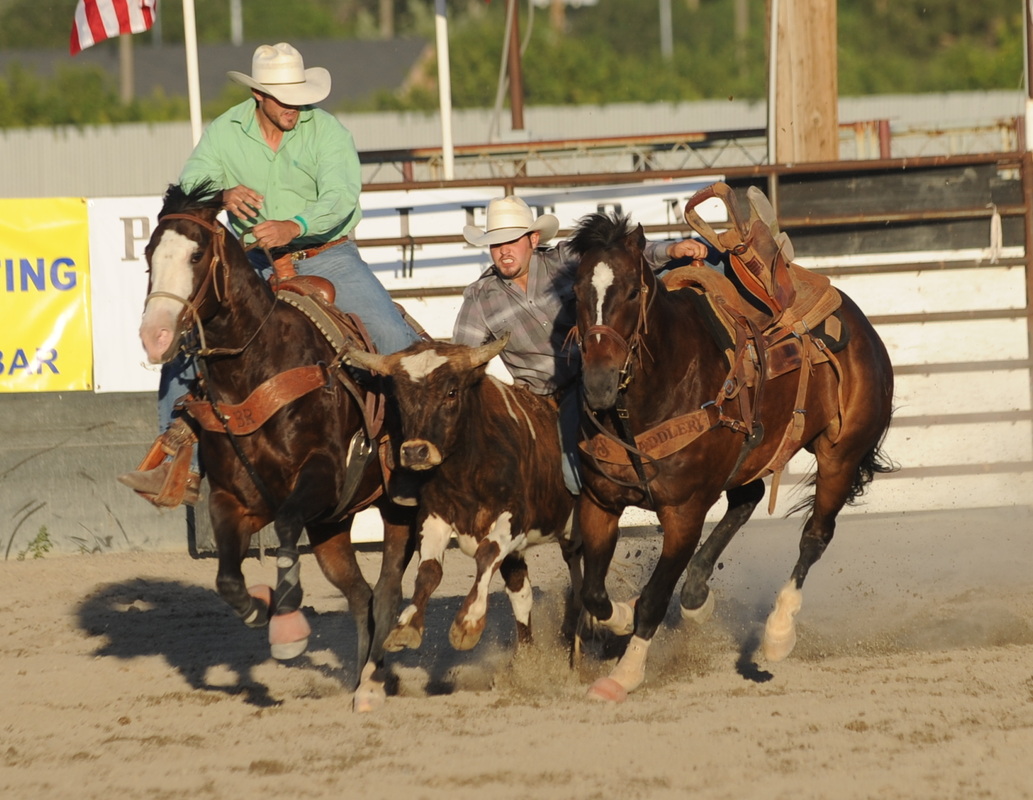
| Hazing: Rodeo term referring to
bulldogging. The bulldogger rides his horse
on the left side. The hazer rides on the right. When the steer is
released from the box, the hazer attempts to keep the steer between
his horse and the bulldogger's horse so that the bulldogger has a
better chance to get off on the steer and throw it down. The word
"haze" is used to mean push or herd the animal. |
 |
|
Locoed: horses and
cattle become addicted to
the eating of Loco weed,
thereby causing the victim
to become thin; with injury
to eyesight, muscular
control and brain; causes an
abnormal growth of hair on
the mane and tail of horses
- on cattle an extra
increase of hair on flanks. |
|
Weedy:
same as above, but
caused by eating too much
black sage or other plant
instead of a normal diet and
causing malnutrition, often
effecting an animal's
thinking.
|
|
|
Malapai: A kind of volcanic rock.
The rock is often closely strewn across the ground and difficult for
animals to negotiate. |
|
| Mule: cross between a
male ass and a female horse (mare) Sure footed and
hard working animal. |
 |
|
Mustang: (MESTEÑO) a feral horse. From the Spanish word mestizo meaning mixed blood.
|
 |
Owl-headed horse: A horse that looks
around a lot.
|
|
|
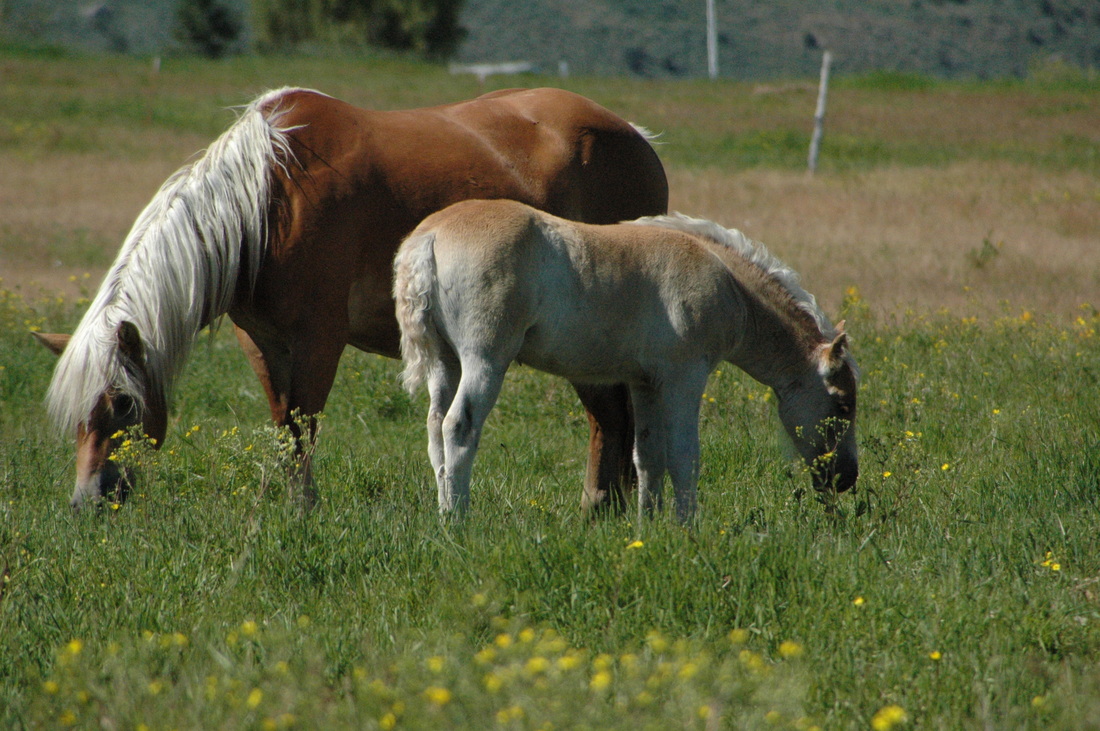
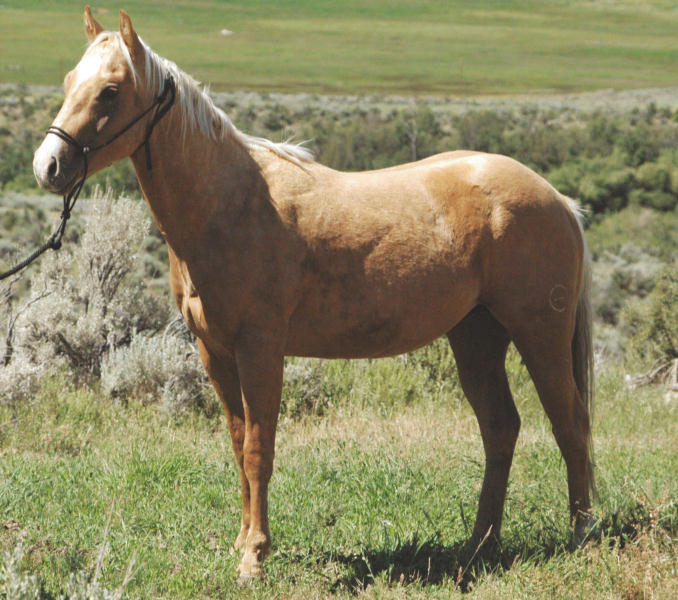
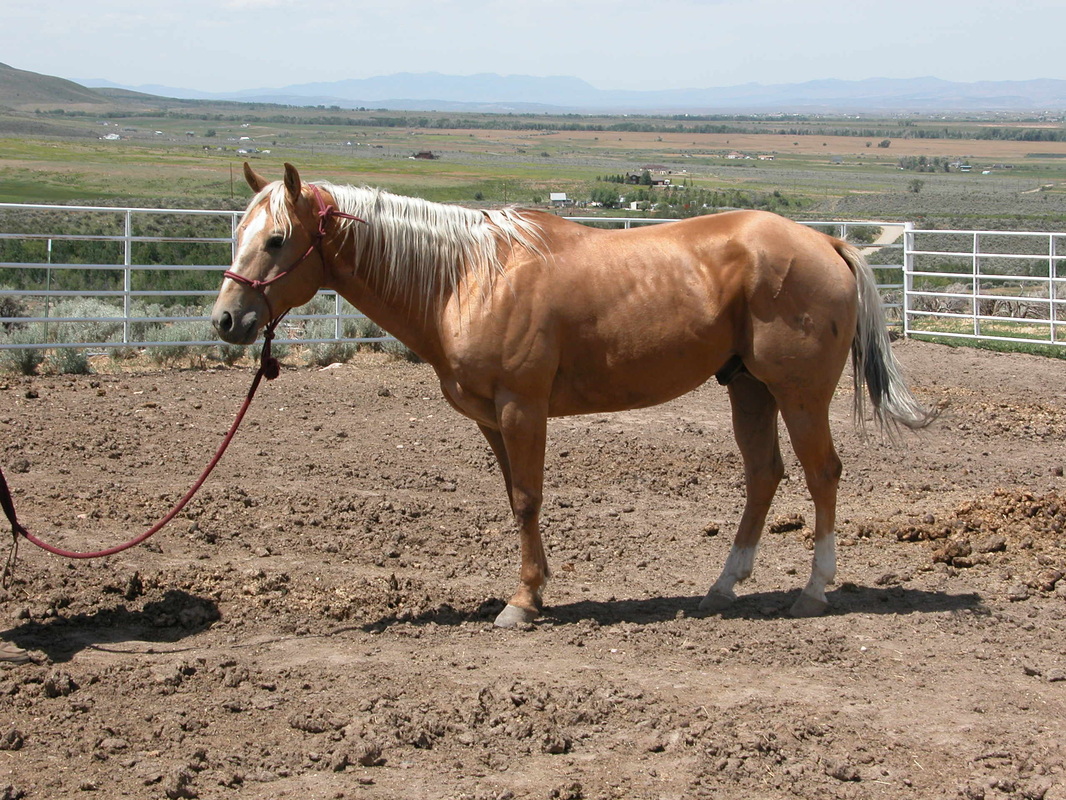
Palomino:
a golden colored
horse with a light or white
colored mane and tail. |
 |
| Parada:
a relay of horses and
the place the change is
made. Similar to cavvy.
Group of broke horses. |
|
|
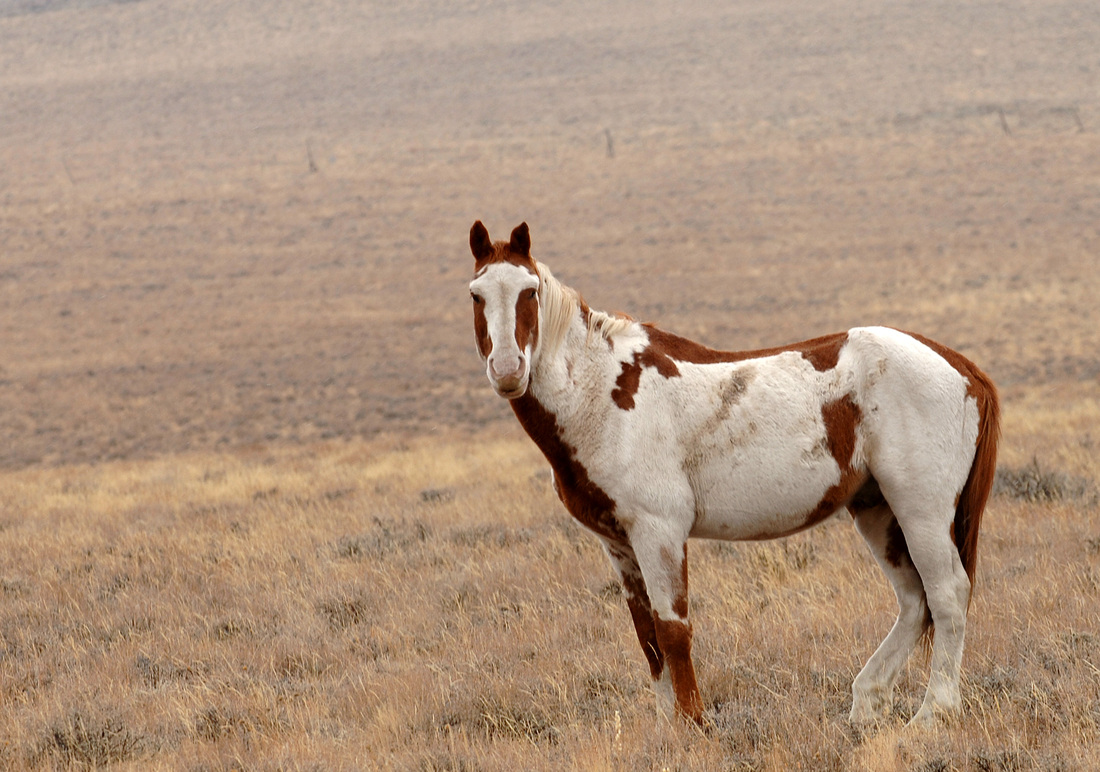
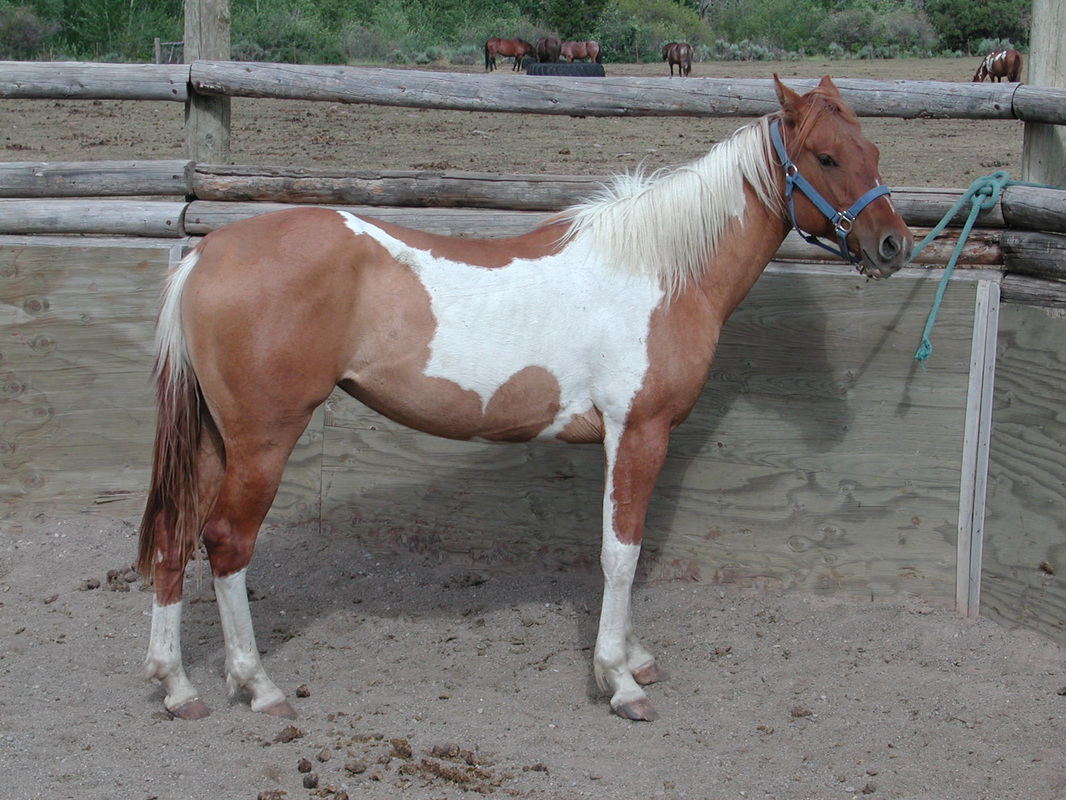
Pinto: a paint or spotted horse. |
 |
Rafter-hipped: horses with a low tail set.
Mustang types lacking a rump often show this fall-off from the
hipbone to the tail. Arabs and Tbreds have a straight topline (flat
croup), but some Quarter Horses show a lot of slope from the loin
down to the tail.
|
|
|
Remuda:
all saddle horses
on a roundup that are thrown
together and constitute the
remount horses for the
cowboys. The remuda is in
the charge of a cowboy whose
duty is to herd and bunch
the animals when the cowboys want a
fresh mount. This term is used most often in the
southwest and Texas. North of U.S. Highway 50 the term most
often used is cavvy or cavvietta. Also see 'caballada',
cavvy.
 |
|
Rim-fire:
When a cowboy gets his rope caught under his horse's tail,
usually while roping cattle. This can cause a severe wreck
when the horse takes exception to the position of the rope.
|
 |
Rocky Mountain Canary: a
burro, sometimes called a
Colorado Mocking bird.
|
|
Rollers: "blowing
rollers" A snorting, rattling sound made by a horse when
he is spooked.
|
|
Rough string:
saddle horses
that buck every time they
are saddled. Some never
become gentle.
|
|
| Stray: an animal found
strayed away from its owner or
from the range where it
belongs. |
|
Stallion:
an adult male
horse.
|
Peppy San Badger, one of the most famous American
quarter horse stallions alive today at 27 years old.
(click for larger view)
 |
| String: A group of
several horses designated for use by a cowboy. Each horse has
a different athletic ability and disposition. A cowboy chooses
his mount for the day according to the work to be done that
day: corral work, big-circle, gather, etc. |
|
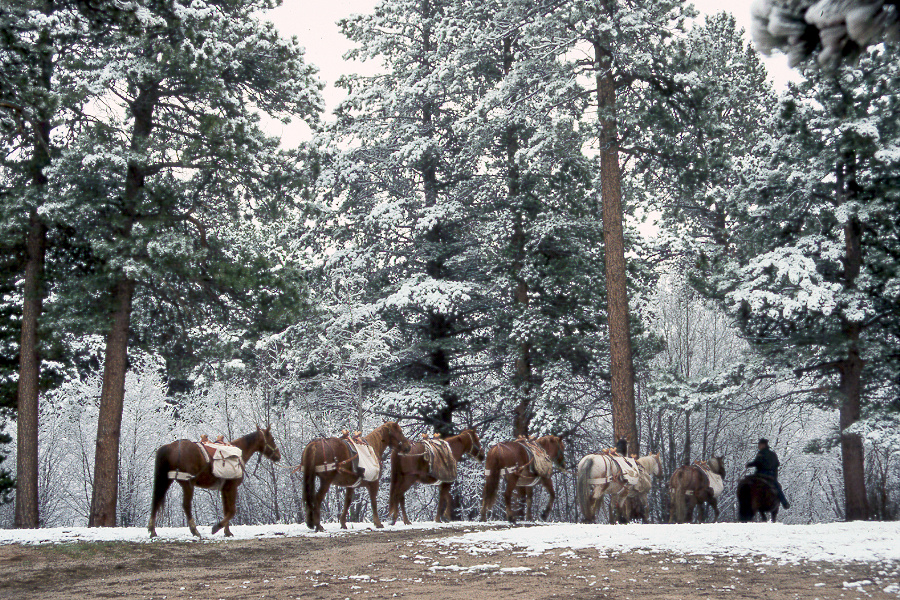
String: a cowboy's rope or a line of
pack-animals.
|
|
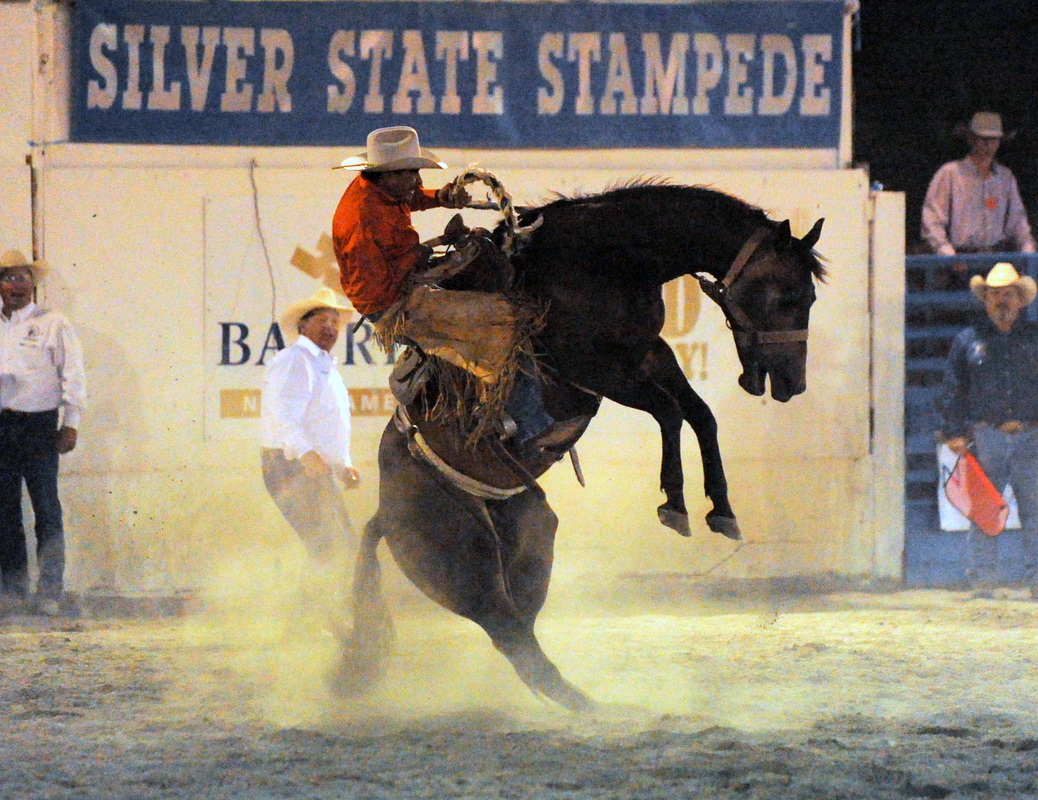
Sun fish: when a bronc
bucks and twists its body
into a crescent, and throws
head alternately to right
and left...looks as though
he is trying to sun both
sides of his body.
|
|
|
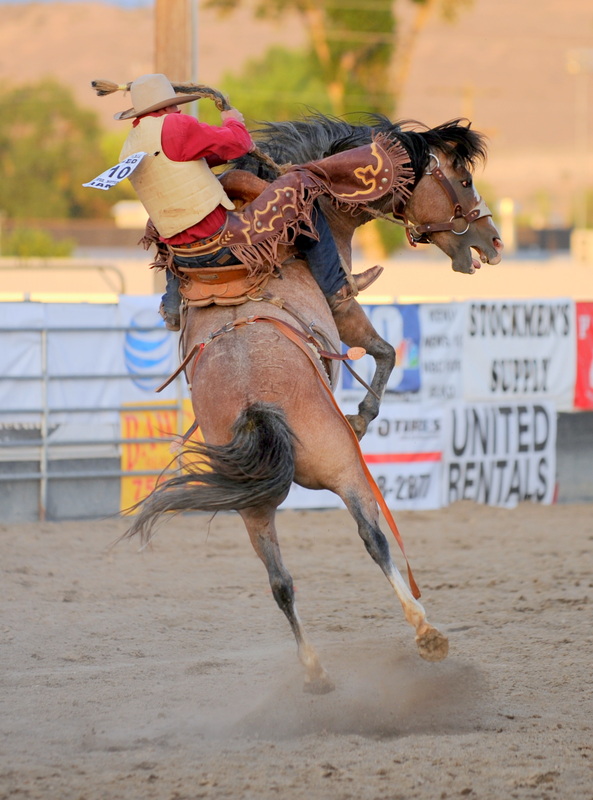
Swap ends:
when a bronc
is bucking and goes up
facing one direction but
lands facing the opposite
direction.
|
|
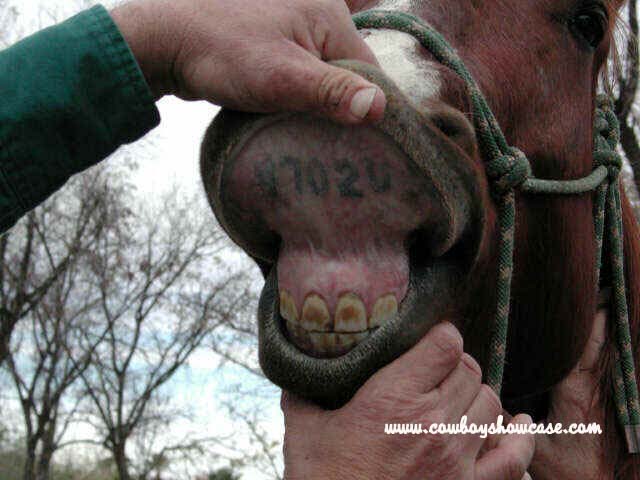
| Tattoo
on a thoroughbred horse. These numbers are tattooed on the
inside of the upper lip and registered with the Jockey Club.
This is a permanent manner of identification, however not easily
seen. |
 |
| |
|
| Two-rein
horse: In the vaquero tradition, the "two-rein" is a step
in the horse's training progression. The horse goes from
snaffle bit to hackamore to two-rein to bridle. A "bosalito"
or thin bosal, used with a mecate goes under a second headstall that
uses a half-breed bit with California-style rawhide reins and romal. |
 |
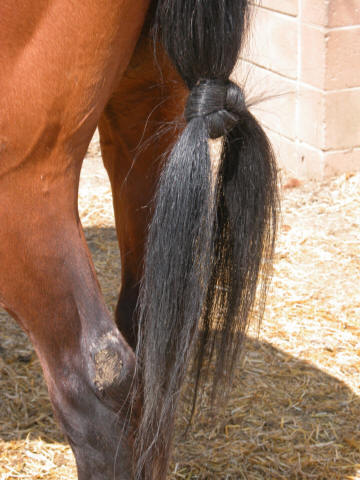
| War Knot: tail
knot used to keep the horse's tail out of the way while working.
Used by buckaroos and vaqueros. |
 |
|
Wheel Team :
first team
attached to a wagon that
requires more than one team,
such as in a "four
up" or "six
up".

|